Showing posts with label beauty. Show all posts

Wednesday, January 20, 2016

Thoughts on a Holographic Aesthetic of Nature


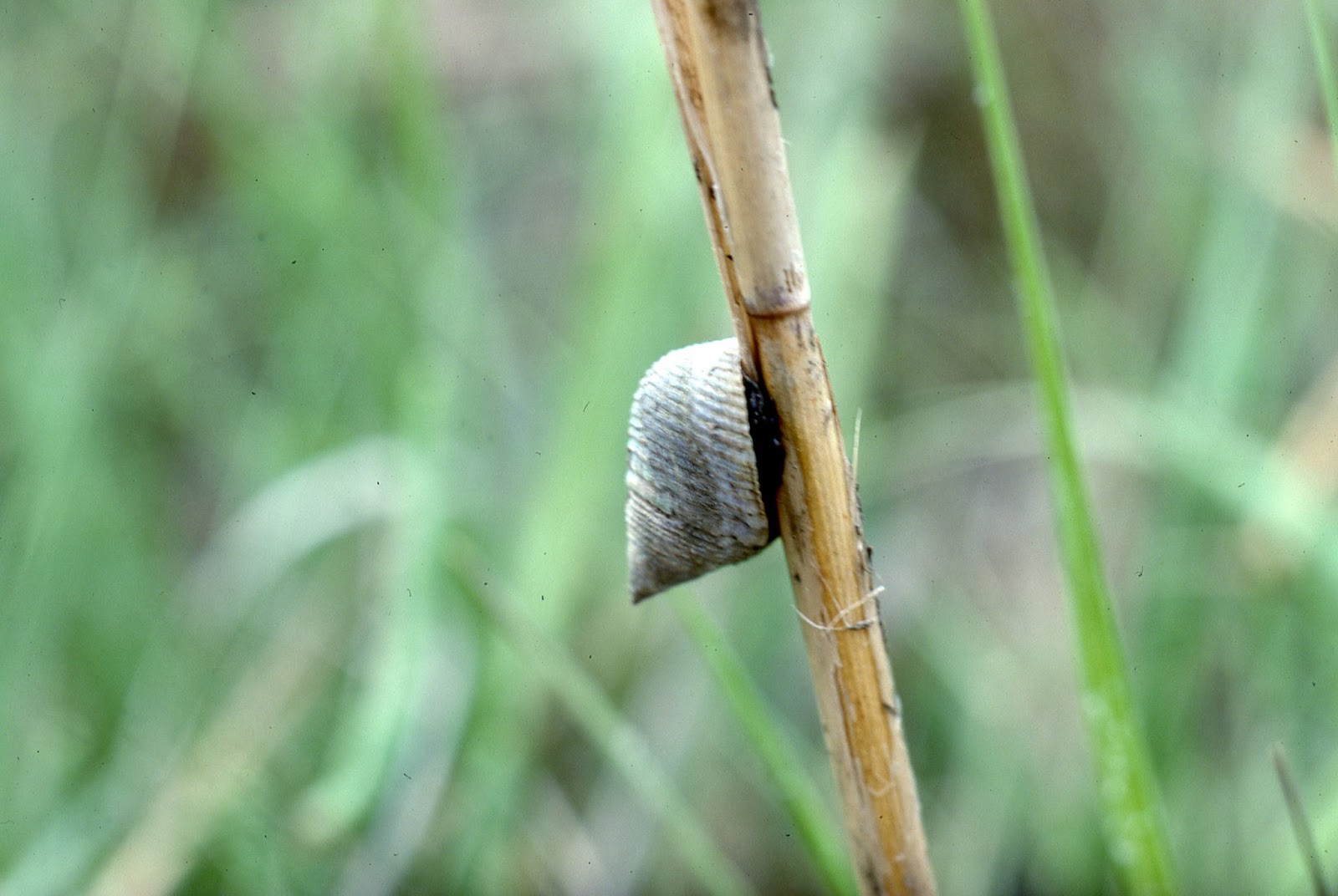
Aesthetics deals with beauty, the nature of beauty and how we relate to beauty. Aesthetics raises questions such as ‘does beauty have an intrinsic nature or do we ascribe beauty to an object or scene? Is beauty in the eye of the beholder or are there specific things or arrangements in nature that project beauty? Elsewhere, I have suggested that training and experience in ecology allows for a multidimensional aesthetic of living systems. I’m increasingly convinced that 'holographic' is a more complete description of what an ecologist sees when he or she views a living system.  The beauty of the vision or perception is not simply two dimensional and what is obvious to the eyes but at least three dimensional. Think about this as if you were looking into a round, clear plastic cylinder, perhaps a cylindrical aquarium stretching floor to ceiling. A crystal tube without distortion. The cylinder descends into the sand of a lagoon. Your eyes move upward passing the roots of aquatic vegetation such as rushes then up the stalks …through the water into the air above the water where a mollusk rests near the top of one of the stalks. All of this in three dimensions with small fish darting about and among the stalks..snails crawling along the stalks, small crustaceans buried in the muck below…Can I see all of those things at a glance? No. But I’ve seen this type of system so many times, in freshwater and salt, over the decades of my professional life that I see them, in my mind’s eye. I am immersed in them. They surround me...envelop me. Ecologists who work in a watery environment, with snorkel and mask or SCUBA, may experience this envelopment more than others. Perhaps learning to look holographically is a good teaching/learning tool. A holographic appreciation of the beauty of the site helps develop an aesthetic appreciation that includes an in depth understanding of nature in in depth and in motion. Holographically, one looks into a living system rather than simply onto a two dimensional representation of the system. Beauty is , indeed, more then skin deep.

Note: Several of us have formed an Environmental Aesthetic Study Group. Contact me at springmountain1@att.net in order to join.

Monday, April 15, 2013

Green Aesthetics II

Continued from the previous post.

Along with our human neighbors, on this often wind-swept ridge, we are frequently visited by deer, turkey, opossum and pesky raccoon (or two).  Bobcat, foxes, and coyote wander the streets and the bird population is colorful and varied.  The black bear moms bring their cubs to the spring-pool below the house and Bill, the six and half foot long black snake patrols the landscape and the hardscape for the frequent deer mice and the occasional copperhead. Red, a wood pecker, never fails to visit and greet me with a small screech when I sit in the alcove on the south-facing front of the house to read and soak in the sun.

I hope that my work over the past five decades of my 70 plus years, much of it mentioned in this blog, has contributed in some small way to help maintain the beauty of life on Earth and will continue to do so over whatever time I have left.  

Let me conclude these posts with the closing lines from the Navajo Night chant sometimes called House Made of Dawn.


In beauty it is finished


Although I will post occasionally to this blog, this is the last of my regularly scheduled bimonthly posts.

Monday, April 1, 2013

Green Aesthetics I


In my posts of August 8 and 15 (Color it Green I & II) I mentioned green aesthetics and suggested that the term might describe not only architectural design but also life styles.  Beauty is the heart of aesthetics and living in beauty is at the heart of a green aesthetic.

In my posts Life on the Wild Edge I & II (January 1 and 15, 2012) I discussed what, for us at Hidden Springs (our home), were some of our attempts to live aesthetically green lives.  I’d like to use this posting and to touch on these efforts again. When I say ‘our’ I’m referring to me and my artist wife Penny (http://artjourney-penny.blogspot.com).

There is a spiritual beauty in living intentionally as lightly on Earth as one can and a special sense of peace in creating a habitat that has a light, even minimal impact on the environment.

Although I never thought I’d find much nice to say about energy providers I have to admit that routinely getting a comparative report of our electrical consumption from our power company telling us that were among the least consumptive of those on its roles with a home of our modest size here in the mountains of western North Carolina, made us feel good…peaceful, somehow.  Over the years, we had put some effort into creating a healthy energy-efficient, safe environment.   Special tubes carefully pierce the roof and bring sunlight into places that previously required energy to light. We have replaced a large number of exotic plants with native plants.  Hundreds of gallons of rainwater are captured each year and used during drier times. Water not captured is directed to places around our small patch most in need of irrigation. The bricks of the house are cleaned with biodegradable cleaner, much of the lawn has been removed and replanted with native shrubs and perennials and mulched leaves are a crop used as ground cover.

Continued in the next post.

Wednesday, August 15, 2012

Color it Green II

(Continued from the preceding post.)

While many of my neighbors apply pounds of chemistry to kill the moss in their lawns, I spend time on my knees (something my very religious Mother would have encouraged) pulling the grass from the moss one small clump at a time.  Moss grows quite well under the gnarly branches of the red maple that shelters the front of our home at Hidden Springs from the often hot Southern sun.

There is something about the repetitive task sometimes associated with caring for the moss that is very meditative.  Our moss garden responds best to sweeping rather than raking. I use a broom with soft bristle to brush away the acorns and leaves that, at various times of the year, coat the surface of the moss.  Each sweep of the broom not only moves the leaves and nuts along but also restores the unity of the green velvety surface.   The rhythmic whisper as the bristles move back and forth across the surface of the moss is the background to a profound meditation…one whispered sweep of the broom at a time.

Perhaps someday Aesthetics will turn its attention to other natural beauties.  For example, the beauty of evolutionary biology as a species comes into being or the beauty of a natural system feeding the cycle of life and death…that would indeed be a substantial transdisciplinary leap into the connections that bind and liberate us all.


Connections.

Shallow depressions in the sandy mud alongside woodland pond. 

Depressions made by a wandering raccoon, an animal so well adapted to feed on the clams buried beneath the surface of the sand that they fish by touch alone.

Connections.

The clams strain minute plankton, clarifying the water, cleaning it until it sparkles--growing inside their shells until a passing raccoon senses their presence beneath the sand, and....

Connections.

Plankton--tiny children of the sun using the basic elements of nature to create the stuff of life, to build their own living plant-selves from the sun and minerals that surround them in the water.

Connections.

Standing -- on the verge of the glassy waters watching the connections unfold, watching the interconnectedness take place. 

Stepping -- carefully least I erase the trace of what has passed here...of the connections that have taken place here.

Wondering -- where I and mine belong in this web of life. 

Sensing -- in those shallow wanderings the elements of nature flowing through me.   

Knowing -- that someway, somehow I and mine have become separate from the primal patterns shifting and blending in the waters of the woodland pond. 

Understanding-- that the separation is only temporary, can only be temporary, is only illusion. 

Standing -- again-- in the shadows at the edge of the pond.

Watching--in my delight and in my fear.

Wednesday, August 1, 2012

Color it Green I


The Aesthetics of Environment

Things change and old words take on new meanings.  Green for example has come to mean many things other than a color…nature, environment, products, politics, and many more.  Here in the mountains of western North Carolina we have a lot of green.  The mountains are clothed in a cloak of green, the meadows, fields, and lawns are green and gold, and it is beautiful. We are told by philosophers that Aesthetics is the study of beauty.  Apparently, the root of the word is derived from the Greek terms for sensing or feeling or perceiving.  I sense and perceive that a healthy world is a green, fecund, and growing world...a beautiful world.  These mountains are beautiful but my professional work has taken me from the deserts of the American West and Southwest to the Gulf Coast and Caribbean and, now, to the Southern Appalachian Mountains and I have seen a great deal of beauty in all of these places.

In recent decades Aesthetics has expanded its scope to investigate the questions of beauty in nature.  We now talk about environmental aesthetics. What is it that we sense when we look at a beautiful river valley or the winding rows of corn stubble cut for silage in the fall, or a small park in a concrete and steel city?  Something happens. We can feel it, we can sense it.  Sometimes that feeling is very powerful and often it is shared. A lot of work is being done on what it is that we feel by neurophysiologists, psychologists, biochemists, and other specialized fields such as cognitive studies.  Perhaps, one day they will tell us all about it in the often sterile, reductionist words of science.  But there is nothing sterile about our individual or, very often, our collective response to these things. 


We are moved by nature to paint it, write poetry about it, to emulate it in our gardens. In terms of the issues addressed by conservation biology, why is it important what we find beautiful?  A number of observers have made the point that the kinds of natural settings we find beautiful often make a substantial difference when it comes to reaching that collective decision of what places we wish to set aside, to save, to restore or enhance and which to surrender to other, perhaps more consumptive uses.

We most often perceive of transformation to a green world in a mega-sense…for example the greening of government programs…corporate greening…and organizational transformation. But, in fact, critical transformation can only take place one person or even one action…one blade of grass, if you will, at a time.

(Continued in the next post.) 

(The literature on the aesthetics of environment and nature pertaining to the world  environmental crisis has grown considerably over the past several decades with numerous journal articles and books.  Over the years, The Journal of Aesthetics and Art Criticism and Contemporary Aesthetics have published a number of articles on the subject. Arnold Berleant, Allen Carlson, John Fisher and others have contributed significantly.  Books addressing this subject include those by  J.B. Callicott, T. Morton, and others. I also suggest Lance Hosey's The Shape of Green: Aesthetics, Ecology, and Design)