Showing posts with label nature. Show all posts

Wednesday, January 20, 2016

Thoughts on a Holographic Aesthetic of Nature


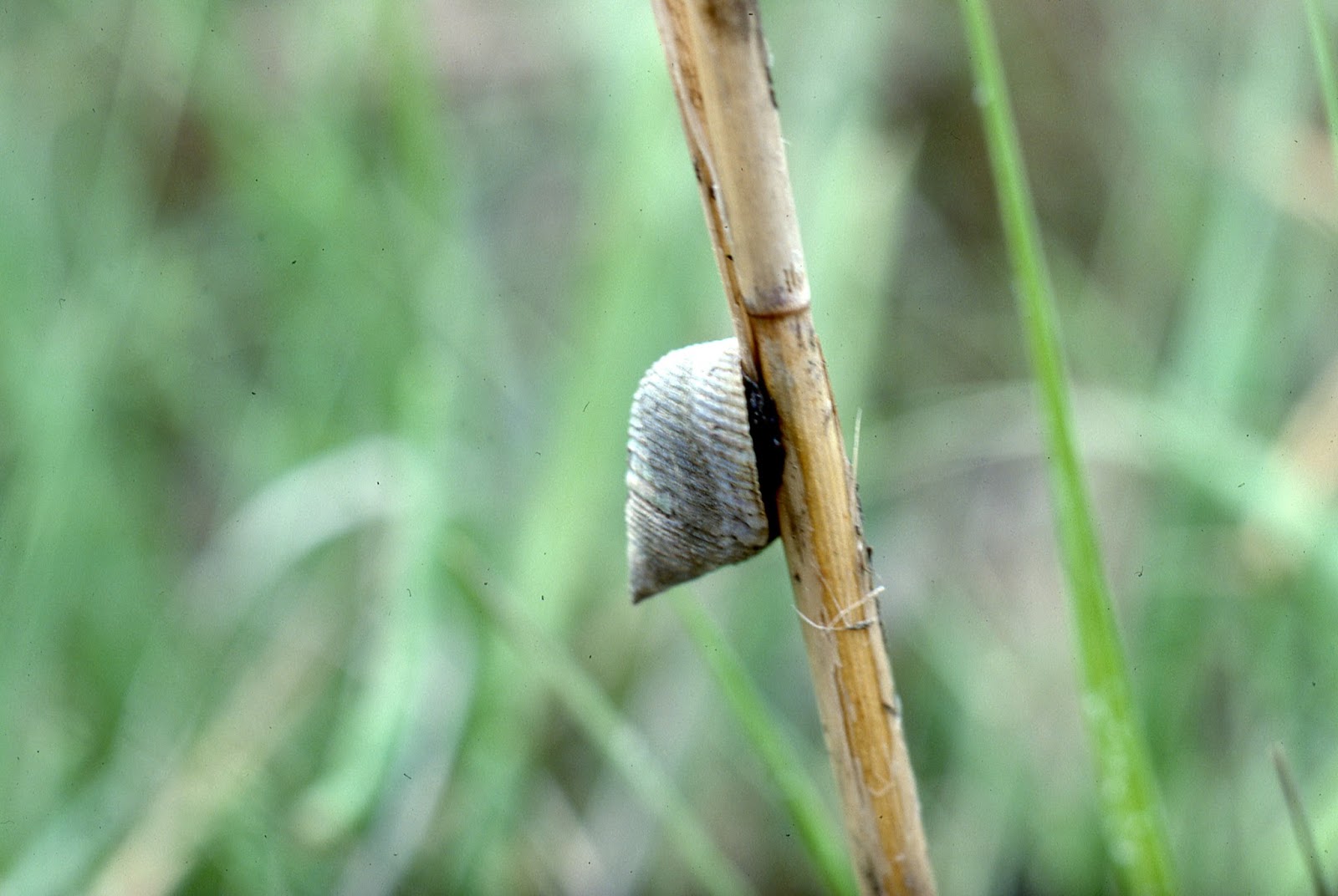
Aesthetics deals with beauty, the nature of beauty and how we relate to beauty. Aesthetics raises questions such as ‘does beauty have an intrinsic nature or do we ascribe beauty to an object or scene? Is beauty in the eye of the beholder or are there specific things or arrangements in nature that project beauty? Elsewhere, I have suggested that training and experience in ecology allows for a multidimensional aesthetic of living systems. I’m increasingly convinced that 'holographic' is a more complete description of what an ecologist sees when he or she views a living system.  The beauty of the vision or perception is not simply two dimensional and what is obvious to the eyes but at least three dimensional. Think about this as if you were looking into a round, clear plastic cylinder, perhaps a cylindrical aquarium stretching floor to ceiling. A crystal tube without distortion. The cylinder descends into the sand of a lagoon. Your eyes move upward passing the roots of aquatic vegetation such as rushes then up the stalks …through the water into the air above the water where a mollusk rests near the top of one of the stalks. All of this in three dimensions with small fish darting about and among the stalks..snails crawling along the stalks, small crustaceans buried in the muck below…Can I see all of those things at a glance? No. But I’ve seen this type of system so many times, in freshwater and salt, over the decades of my professional life that I see them, in my mind’s eye. I am immersed in them. They surround me...envelop me. Ecologists who work in a watery environment, with snorkel and mask or SCUBA, may experience this envelopment more than others. Perhaps learning to look holographically is a good teaching/learning tool. A holographic appreciation of the beauty of the site helps develop an aesthetic appreciation that includes an in depth understanding of nature in in depth and in motion. Holographically, one looks into a living system rather than simply onto a two dimensional representation of the system. Beauty is , indeed, more then skin deep.

Note: Several of us have formed an Environmental Aesthetic Study Group. Contact me at springmountain1@att.net in order to join.

Tuesday, October 1, 2013

Water in Wet Places


Living in the southern end of the Appalachian Mountains, one can become jaded about water. There is a lot of it here.  Often the streams and ditches run full.  Almost every low place is a puddle complete with frogs and dragonflies.  Only a few minutes from our home at Hidden Springs is an area that boasts literally hundreds of waterfalls.  And, according to climate change models, it is supposed to get wetter here in these mountains. 

It is easy to take all of that water for granted unless, like me, you were raised in a very dry place where you don’t take water for granted…not even a tiny trickle or a stagnant pool.  Even in a place literally overflowing with water some places are special.  For example, there is a small stream only a few miles from our home.  Not much more than a trickle, this stream wanders down a canyon beside a trail.  There is one place along the trial where I always stop to take a closer look at the stream.  At this spot the stream flows into a quiet, shallow pool. The pool is surrounded by lush grass and framed by a fallen long. I’m not sure what it is about this spot that grabs my attention.  I suspect it might be something about the peace that I feel here and, possibly, the harmony with which Nature has arranged the elements of the place.  I think most of us seek these special places in our lives, at least those of us who have some sense of the wild and the beauty in Nature.

Sunday, January 15, 2012

Life On the Wild Edge - Part II

(Continued from the preceding post)

During the fall of 2005 we built a concrete structure at the outflow of the pond in order to stabilize the outflow at a constant rate.  This relatively unobtrusive structure, now moss-lined, has also allowed us to estimate the approximate production of the spring at the outflow at greater than 22 gallons per hour.  Given that water produced by the spring evaporates and also percolates into the surrounding soil, we know that production from the spring itself has to be greater than the water that exits the pond through the outflow.

In any event, the pool provides habitat for a healthy, noisy population of frogs and other amphibians.  The frogs attach their egg clusters to the loose branches that float about the pool.  They spawn throughout the late winter and are joined by other species as the seasons advance. The Southern Appalachians are incredibly rich in amphibian species. In addition to the frogs, we have noted three species of salamanders and I'm sure there are others. 

There are times in the spring and summer when I think that the local bear population outnumbers the local human population. The black bear is quite an impressive creature capable of doing a bit of damage.  We are fortunate that the black bear is also a relatively peaceful species.  The bears will surrender their normal shyness in pursuit of the seed that many of our neighbors offer to the rich bird population that visit and, in some cases, live on these ridges.  At Hidden Springs we don't we don't intentionally feed birds or other wild species.  We are, however, replacing exotic vegetation with native vegetation that produce food for the birds and other animals.  By the way, the bears like the spring pool and frequently use it as a ‘wallow’ in which to bathe.  Nothing smells quite like a bear dripping wet from its bath. Here at Hidden Springs we are using many of the restoration techniques we applied and experimented with at White Oak Cottage in Georgia, and subsequently published in Countryside Magazine, Permaculture Magazine, and other outlets. 

Human populations will continue to push out against the wild land edge.  Where we cannot contain ourselves, we must learn how to make that push as gentle as possible.  Here at Hidden Springs, just as at our previous homes we are trying to learn how to do that.

Additional material on sensitive Earthcare may be found as follows:

Baugh, Tom. 1995. Restoring Spring Meadow. American Horticulture 74(12) :12-13.
Baugh, Tom. 1996. Beating sidewalks into gardens. Organic Gardening 43(2) :72.
Baugh, T. and P. Baugh. 2001. A hole in the forest. Countryside 85(1):93-96.
Baugh, T.  2003. An American Meadow.  Permaculture Magazine. (35):23-25
Baugh, T.  2003. Members of the community. BackHome Magazine. May/June 2003.
Baugh, T. 2003. Defensive gardening.  Countryside 87(3):37-40.
Baugh, T. 2003. Build and log ‘n limb fence.  Countryside. 87-(4):62-63.
Baugh, T. 2003. Native shrubs that won’t impress the neighbors.  Countryside 87(5): 67-68.
Baugh, T. 2003. Waterhole at White Oak.  Countryside 87(1): 52-53
Baugh, T.  2003. The Rain Catcher.  Countryside. 87(6):36-37.
Baugh, T. 2003. Half Time Creek.  Permaculture Magazine. (37)19-22.
Baugh, Tom. 2004. Ripples in the stream. Countryside. 88(6):52-53.                                   
Baugh, Tom. 2004. When a tree falls in our forest. Permaculture Magazine. 42:52-54.
Baugh, Tom. 2006. Life on the wild edge. Countryside 90(3):79-81.

Sunday, January 1, 2012

Life On the Wild Edge - Part I

For decades now, my artist wife Penny and I have practiced a form of restoration ecology whether we were buying previously existing homes or, on one occasion, building one of our own.  With respect for their beauty and uniqueness, we have generally removed nonnative vegetation and reestablished native vegetation.  We have made as many energy and water saving modifications to the house itself as possible and as we could afford, including establishing rainwater holding tanks and installing tubes that bring sunlight into previously dark rooms. We recycle, we repurpose, and we compost. Mostly, we try to live quietly in our neighborhoods and in unity with our non-human neighbors.  For example, our mouser, for the areas above and below the living quarters is Bill, a five foot black snake. Black bears visit the spring at the lower end of our small patch and the cubs play in the spring pool.  The bears often pass under my study window and their wet, gamey smell lingers for some time along with their paw prints in the wet earth.

In fall of 2004, we moved from White Oak Cottage, our place deep in the woods of northwestern Georgia, and relocated to the mountains of Western North Carolina.
We were attracted to Hidden Springs by a number of things.  The house was about the right size.  The rock of the ridge along the west side of the property was exposed along half of the property line.  The native rhododendrons and laurels were beautiful and provided a sight and sound barrier between us and our closest neighbors.  We were also attracted to the hollow that dropped steeply down behind the north side of the house. 
Unlike White Oak Cottage, our home in Georgia, Hidden Springs is located in a development aptly named Rambling Ridge about ten minutes from the crossroads of Etowah, NC and half way between the much larger centers of Hendersonville and Brevard, both about 30 minutes away.  Our home is located on a ridge at an elevation of 2500 feet, about midway up a convoluted series of ridges that rise a thousand feet above us and drop below us to the valley floor through which winds the French Broad River. 
We live on what ecologists often refer to as the wild land edge.  As human populations push harder and harder against the as yet undeveloped places of Earth, an increasing number of people in the United States and throughout the world live on the wild land edge.  All in all, this is a loss to Earth and all its ‘tribes’ of living things.  But the inexorable push will continue.  There are ways to soften the impacts of human expansion.  There are even ways to correct those impacts and restore wildland and we must look for these ways in order to live in greater harmony with the larger community of life on Earth.
We are the third owners of Hidden Springs.  Twenty years ago, a developer brought in a bulldozer and knocked the top off of this part of the ridge to create a place just flat enough for our home.  In the process, all of the native rhododendrons and mountain laurels were bulldozed into oblivion.  Fortunately for us, the destruction stopped no more than six feet behind the rear of the house.  From that point the land drops steeply into a hollow and the rhododendrons and laurels take over.  The first owners of the home planted the front of the place with an extensive lawn and mostly nonnative plants. They must have been comfortable with this because when we purchased the place and moved in it was hard work for me to undo 20 years of ornamental growth.  The roots of those shrubs went deep. 
But most of these imports are gone now and in their place native species such as sweetshrub, sweet spire, and strawberry shrub are growing.  We brought cuttings of these species from White Oak Cottage in Georgia and planted them here at Hidden Springs.  Many of them made the journey successfully and have taken root.  They are now, years later, several feet tall.  Their red berries and white racemes feed the birds and nurture the butterflies and the deep auburn of their leaves will complement the muted russet brick of our home providing color through the snows and over the winter months. 
Those places left barren by the removal of nonnative annuals and perennials have been replanted with native species such as trillium, trout lily, galax and other native perennials. The corms and tubers we have planted over the years have survived and increased in great numbers thus establishing new 'native' plant beginnings on this ridge.
It wasn’t until the surveyor’s plat arrived, while we were still at White Oak Cottage in Georgia, that we realized that there was yet another feature to Hidden Springs.  The plat showed a ‘pond’ at the lower end of the L-shaped property.  On the day we finalized the purchase I hiked down into the hollow and there, set among the rhododendrons and just within the property lines was a pond that I estimated to be about 5,000 gallons.  What an added bonus and all of this on less than an acre! 

(Continued in the next post.)

THE EDGE OF THE WORLD

 I sit here
on the edge of the world.

Beyond me
the forest stretches further than the western horizon.

There are roads out there
dirt and gravel, and asphalt.

But it seems
as if this small cottage, perched on the side of this hill
is the edge of the world

Beyond me
the roiling clouds of a late winter storm color the sky black and grey.

There are people out there
living lives uniquely their own.

But it seems
as if this small cottage, placed among the ancient oaks
is the edge of the world.

Beyond me
The forest anticipates change, the coming of spring with budding shrub and tree.

But it seems
as if this small cottage, slumbering above the greening meadow
is the edge of the world.

(Previously published in the summer 2003 issue of Talking Leaves)
Thursday, December 1, 2011

Nature and Human Settlements - Part II

(Continued from the preceding post.)

Much has been accomplished since The Granite Garden was written. For example, in 1990 Black Rose published David Gordon’s book Green Cities dealing with ecologically sound approaches to the use and management of urban space.  In 1994 Platt, Rowntree, and others published a book titled The Ecological City focusing on preserving and restoring urban biodiversity.  In 2001 Richard Register, with the urban ecology group in the Berkeley/Oakland area of California and leader in the Ecocities movement, published Ecocities: Building Cities in Balance with Nature, and then, in 2006, revised it and reissued it as Ecocities: REbuilding Cities in Balance with Nature.

From all of this theory and professional practice has developed an evolving movement that is making inroads, some small, and some very large, into the ‘greening’ of human settlements.  Early on, the American Forestry Society turned its attention to urban forest cover and developed guidelines for the reforestation of urban areas. Green roofs are another technique used to reduce the urban heat island effect and increase urban wildlife habitat. Roofing materials have been developed that reflect light and thus heat from rooftops, rather than absorb heat and require air conditioning. Construction techniques are now being used in buildings and other places in our settlements to reduce environmental impacts.  For example, porous concrete is used to replace asphalt in order to make more efficient and environmentally sound use of the rainwater that falls on the thousands of acres of urban hard surface.

In order to move all of this forward and put all of it into practice, Urban Ecology study centers have been established at a number of places and the United Nations has a sustainable cities initiative.

Government is also involved in the greening of our settlements, sometimes through planning, ordinances, laws, and even funding. In number of areas we see nonprofit consultative groups, that concentrate a substantial amount of professional skills, focused on greening the built environment. A lot of this energy and movement is reflected in literally thousands of organizations in communities, cities, and towns across the world.  These organizations often take on the role of advocates, and sometimes as consultants.

Much of the greening movement within communities has centered on the stabilization and restoration of streams and, where they exist, rivers.  These projects have ranged from removing trash from streams, to planting vegetation or placing structures to slow or stop erosion, to the restoration of special wetland communities, to 'day-lighting' streams that were covered over in the past.

Other work has been undertaken to establish corridors of habitat along which wildlife can move with some freedom and safety.  Still other efforts include general protection, conservation, and restoration of existing patches of forest or desert or shrub-land habitat, depending on where the city or urban center is located.

The urban restoration movement seems to have merged, to a great degree with the broader sustainability movement, and to some extent with the community gardening and permaculture movement, and now we talk about ‘sustainable ecocities.’  In fact, the first International EcoCities Conference was held in 2000 and there have been others since. An increasing number of very fine colleges and universities now offer training in the field of Urban Ecology. 

Living in community requires that we reach agreement about how to proceed on the greening of our settlements.  There are other factors stirring out there, however, that will affect any decisions we make concerning the nature of our settlements, our place in them, and the place of other species.  Not the least of these are the costs and availability of energy, the costs and decreasing availability of water, and the inconvenient but undeniable truth of global climate change and its impacts.

On the morning of December 13, 2000 I was cochairing a regional committee of a US federal initiative. One of the young staffers, who had flown down from Washington to be with us, excused himself to take an urgent call.  When he reentered the room he asked for a moment to make an announcement.  We all knew what was coming. US Vice President Al Gore, following a decision of the US Supreme Court, had conceded the election to George W. Bush and our urban greening initiative had been dissolved by the incoming administration. Several months later buildings in American cities would be under attacks from the air and bombs would fall on Baghdad. The world had changed.

Tuesday, November 15, 2011

Nature and Human Settlements Part I

During the latter part of the 1990's I had the opportunity to work on a number of projects intended to restore some environmental health to the built environment...to towns, cities, and other concentrations of humanity. This was especially rewarding work. I also had the opportunity to reflect on the 'greening effort' of human settlements in presentations and publications.  Nature and Human Settlements is the title of one of those reflections.

Nature and Human Settlements - Part I

The year 2007 was a special year, a landmark year in human history. This was not the year during which war was abolished. This was also not the year when hunger and crushing poverty were vanquished, more’s the pity. No, 2007 was the year of Urban Humanity.  This was the year when over half of humanity came to live in what we call urban settlements. Well over three and a quarter billion people came reside in the cities, towns of Earth.

One would think that after all of these centuries…millennia, in fact…in response to this great migration of the human tribes…our settlements would be places of choice by virtue of the quality of life and environments they provide.  But this is not the case. The air in most of our larger and many of our smaller settlements is foul and transportation is abysmal.

It was while living in Atlanta a few years back that I learned some of the more unique aspects of human settlements.  I learned, for example of what is called the ‘heat island effect.’  Because of the exhaust of heat as a waste product of the human enterprise, many of our larger settlements are warmer than the surrounding countryside.  They are covered in a bubble of essentially waste energy and gases. In some cases, these bubbles are so dense that they create their own weather…within and outside of the bubbles. The heat island can have an impact even on the weather of the surrounding countryside.

The very structure of so many of our communities mitigates against good health practices. We drive everywhere, we walk nowhere, obesity has become the rule, and a major health crisis. I learned about something else in Atlanta.  I learned about what happens when the integrity of rivers and streams are not honored.  If you put a map of Atlanta (and many other cities) on a flat surface and look at the streams that flow into it…those streams vanish as they enter the city.  They don’t actually vanish they go under the ground, under the cities.

I learned some other things during my urban years, however.  I learned how wonderful it is when citizens band together with a dream. While serving on an interagency initiative, I remember visiting with a group of people who wanted to create a little niche park in their community. And when I say little, that is just what I mean.  A very old house in one of the then more challenged sections of Atlanta, with a stone basement cut into the side of a hill, had decayed and collapsed into its basement.  Over the decades an oak had grown from the stone wall.  When I visited the site, I saw a mess but the citizens saw a small, pocket park.  We gave them the funds and a little technical expertise, they cleaned the site, put in a small path, some flowerbeds, and a couple of benches and had a park.

As an ecologist I have stood looking out over literally thousands of acres of wildflowers after the rains of spring and a bit of snow had moistened the earth just enough for one of those infrequent and incredible desert wildflower blooms.  I have floated over a hundred feet below the surface alongside a massive wall of corals, a thousand feet above the bottom of the Caribbean Sea.  These are wonderful experiences for someone with my background and interests.  But I have also experienced the great pleasure of seeing the first river otter return to a clean and stable urban stream whose rehabilitation I had a small something to do with. I have been part of the day-lighting and rehabilitating of streams that had been buried under a city for decades, and I’ve had the joy of helping link previously detached patches of seriously degraded urban ‘wildlands’ into corridors that allowed the movement of native animal and plant populations.

Perhaps the most important thing I have learned is the power of people when they decide they are just ‘not going to take it anymore’ and begin to green and replant their communities.  In each generation there have been those who look upon the city…the town, the built environment…as the center for the intellectual and spiritual enrichment of the human experience. The urban ecology movement has been part of that.  In a way, it has been around as long as there have been those sensitive to what it means to gather together in human settlements.


In the mid-1980’s, while still wandering the deserts of the Southwestern US, I came upon Anne Winston Spirn’s book ‘The Granite Garden’ in which she discusses the cities from the perspectives of nature and human design. I bought that book and have had it all of these years, never thinking, when I made the purchase, that I would have a small part in the contemporary movement to reinvent that which we call ‘urban.’  In the opening words from the Granite Garden…Anne says, “Nature pervades the city, forging bonds between the city and the air, earth, water, and living organisms within and around it.”  That was her vision and it’s a good vision.

For additional material on this subject search the WEB using the terms baugh with urban residential wildlife or urban ecology or urban resources.


(Continued in the next post.)