Showing posts with label Tom Baugh. Show all posts

Wednesday, January 20, 2016

Thoughts on a Holographic Aesthetic of Nature


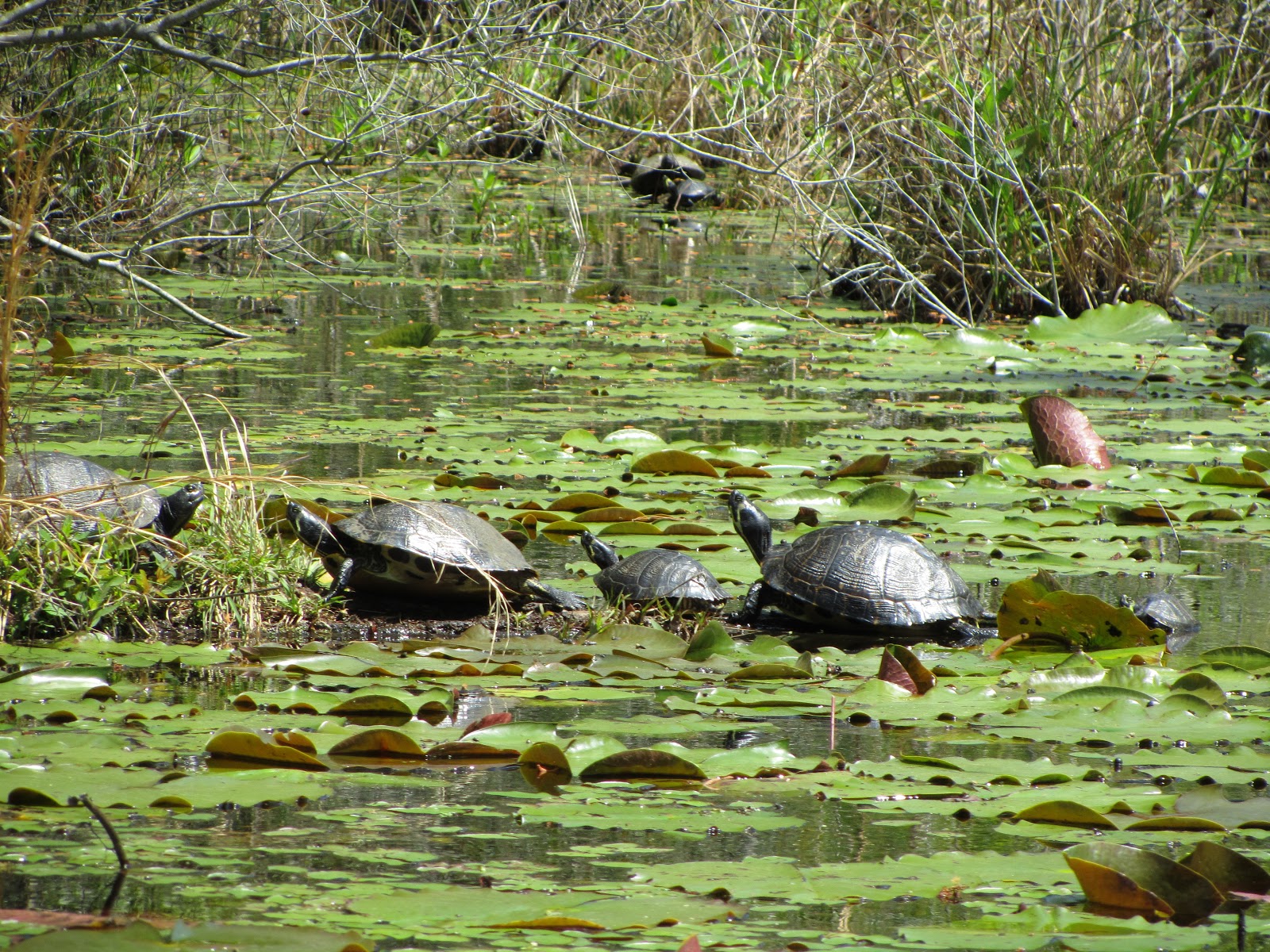
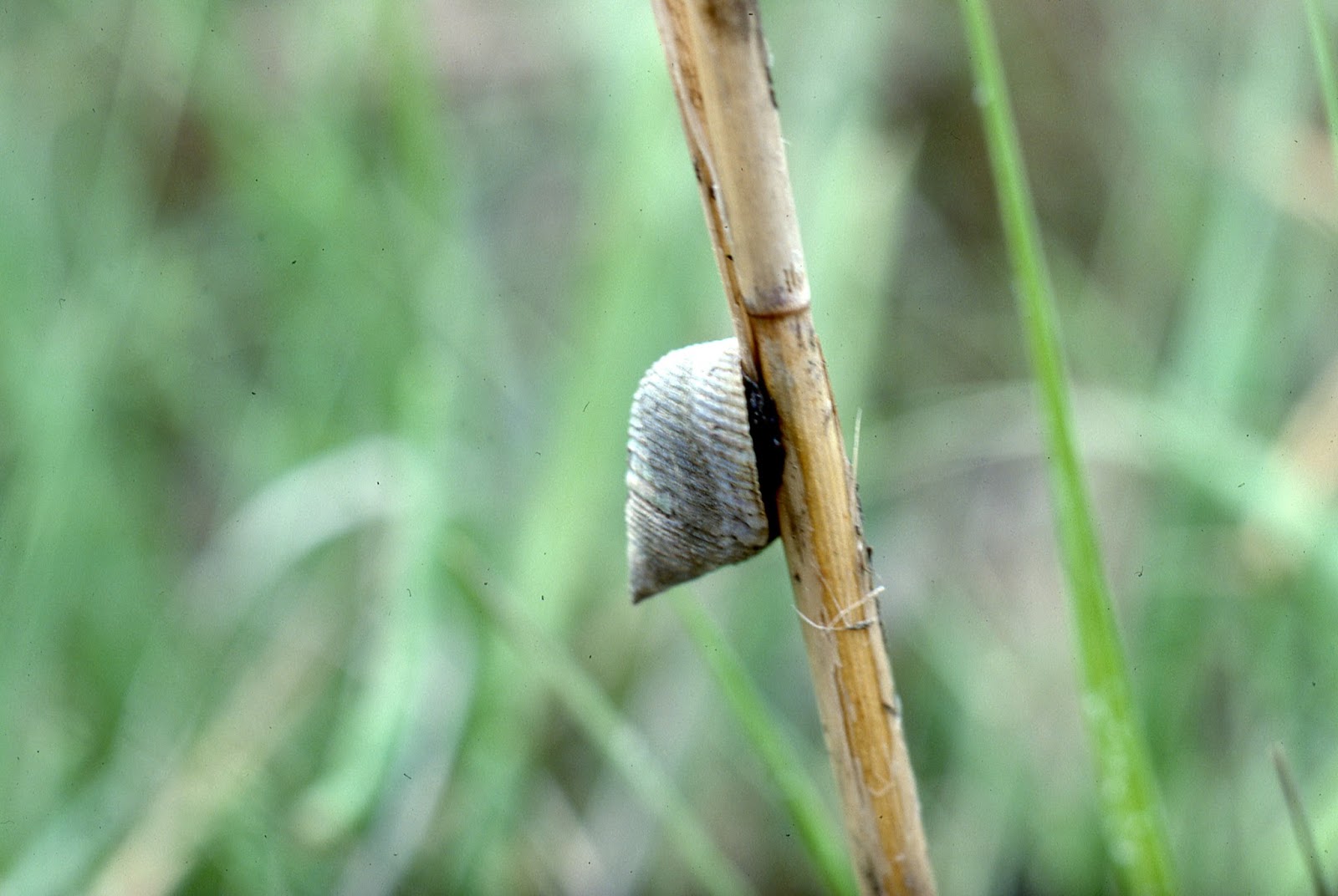
Aesthetics deals with beauty, the nature of beauty and how we relate to beauty. Aesthetics raises questions such as ‘does beauty have an intrinsic nature or do we ascribe beauty to an object or scene? Is beauty in the eye of the beholder or are there specific things or arrangements in nature that project beauty? Elsewhere, I have suggested that training and experience in ecology allows for a multidimensional aesthetic of living systems. I’m increasingly convinced that 'holographic' is a more complete description of what an ecologist sees when he or she views a living system.  The beauty of the vision or perception is not simply two dimensional and what is obvious to the eyes but at least three dimensional. Think about this as if you were looking into a round, clear plastic cylinder, perhaps a cylindrical aquarium stretching floor to ceiling. A crystal tube without distortion. The cylinder descends into the sand of a lagoon. Your eyes move upward passing the roots of aquatic vegetation such as rushes then up the stalks …through the water into the air above the water where a mollusk rests near the top of one of the stalks. All of this in three dimensions with small fish darting about and among the stalks..snails crawling along the stalks, small crustaceans buried in the muck below…Can I see all of those things at a glance? No. But I’ve seen this type of system so many times, in freshwater and salt, over the decades of my professional life that I see them, in my mind’s eye. I am immersed in them. They surround me...envelop me. Ecologists who work in a watery environment, with snorkel and mask or SCUBA, may experience this envelopment more than others. Perhaps learning to look holographically is a good teaching/learning tool. A holographic appreciation of the beauty of the site helps develop an aesthetic appreciation that includes an in depth understanding of nature in in depth and in motion. Holographically, one looks into a living system rather than simply onto a two dimensional representation of the system. Beauty is , indeed, more then skin deep.

Note: Several of us have formed an Environmental Aesthetic Study Group. Contact me at springmountain1@att.net in order to join.

Tuesday, September 15, 2015

Reflections on A Pool of Still Water


I doubt that there is anything in the environment that attracts me more quickly or engages my attention and fixes me so raptly, than a pool of still water. The context doesn’t even seem to matter much. A pool alongside a path through the woods or bubbling from sandy desert soil in the natural environment or a decorative water feature in the built environment, are like magnets pulling me to them and through them and into them.

I never even feel the water close over my head as my mind and spirit slip beneath the glassy, still surface. I never feel my mental gills begin to function as I slip deeper and deeper into the water. The objective pool may only be inches deep but subjectively I am rapidly and fully submerged and enveloped.  My eyes never blur or burn as my spirit opens to the shoals of tiny, darting silvery fish, the vegetation reaching for the surface and the sun, or the quietly resting frog.

It has been this way since I was a child, since my Grandmother took me to a ‘pet shop’ where I peered into my first aquarium or sat by the side of the first fish pond I had ever seen with orange-gold fish, their tails and fins moving in wavy streamers in the green algae stained water.

Over the decades I’ve looked into hundreds of aquariums and many fish ponds and my response never varies. Mind and spirit gently slip beneath the surface.


There is a debate in Environmental Aesthetics between cognitive and noncognitive theories…objective information based on science and more subjective, less fact-based approaches.  I have to wonder who I am. Where am I in this debate? It has been several undergraduate and graduate degrees since those early pet shop visits and I can explain in the most intimate detail what is happening chemically, physically and ecologically in this special wet world of mine...I know its secrets. I have physically slipped beneath the surface, breathing from a cylinder on my back, and hung mesmerized over the void 120 feet down on a Caribbean reef. I have snorkeled among an incredible plethora of life in shallow lagoons, and have dived deep into flooded desert caves and I have substantial scientific knowledge of those habitats and ecosystems. But those shallow pools, of which I also have great scientific knowledge, continue to call me, not so much as a scientist but in a spiritual sense. I’m not a religious person so perhaps all of this is what  E.O. Wilson refers to as ‘Bioiphilia,’ the human bond with other species. Perhaps I’ll never know the answer but I’m very comfortable with the question.

Several of us have formed a study group to address Environmental Aesthetics. For those who are interested, please  contact me at springmountain1@att.net.
 

Monday, August 31, 2015

On Aesthetics

Is it enough to say that a particular place is beautiful and that it projects (or we perceive) aesthetic appeal?  In my work as an ecologist, I analyze biodiversity, and the context in which it exists,  and describe how various aspects of an area function as a system. 
Simply saying of a place that “this is an ecosystem,” isn’t enough. Even qualifying that statement by claiming the place is a ‘wetland ecosystem’ isn’t enough.  Taking it down a step further and announcing that the place is a subset of a wetland ecosystem, for example a Southern Appalachian acidic fen or a desert wet meadow complex may work a bit better toward an acceptable description offering shared meaning.  But even to get this far I use a consensual methodology and terminology developed over decades by others who also call themselves ecologists.

The same need for system, method, and terminology appears to hold true for philosophical field of Aesthetics, including the sub-field of Environmental Aesthetics…the focus of our forum. A number of scholars have suggested an ‘aesthetics of nature’ through which that beautiful scene mentioned above can be placed in a context that allows us to describe it with some degree of consensus.
Over the years, I’ve looked at several proposed aesthetics of nature and  I wonder if any one system can adequately describe the range of beauty of those places in which I work and my response to those places, or the response you or others may have. For the past five years I have conducted fieldwork in the fens of the Blue Ridge Escarpment in the Southern Appalachian Mountains of Western North Carolina and in isolated wetlands in the desert lands of the Great Basin of the western United States.  These are two very different regions of the world, very different ecosystems, and very different wetland systems.  And yet, I find beauty in both systems including the pocket-sized patches of damp sand in the Great Basin and the densely vegetated mucky fens of the Escarpment, with their mosses and ferns.  I find beauty not only in their present but also in their past…in their evolutionary development. In fact, I find myself drawn more and more to considering the aesthetic beauty of the evolution of living system….like incredibly colorful and complex fractals evolving on a viewing screen. 
Several of us have formed a study group to address Environmental Aesthetics. For those who are interested, please  contact me at springmountain1@att.net.


Saturday, August 15, 2015

Footsteps III


Continued from preceding post)

The rocky gorge of the Walker River. (Photo by Tom Baugh)
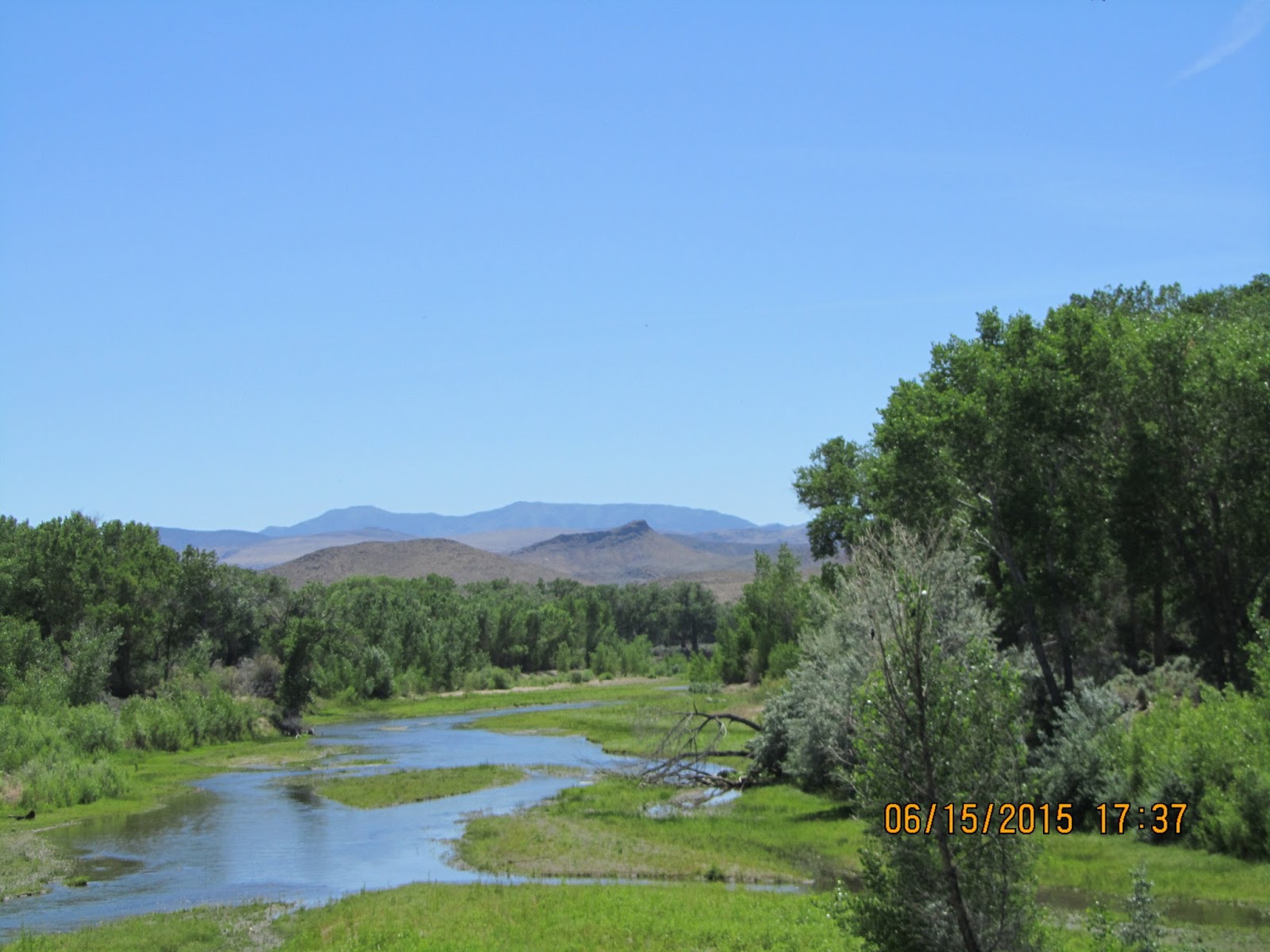
Early that morning, we had driven east in the general direction of the alkali flats and salt pans of Carson Sink. In the days of the 49 er's the Carson River would have flowed down from the Sierra Nevada Range, through the Carson Valley, to spread out before vanishing in the Sink. Migrants moving west toward the lure of California gold would have passed through this area as rapidly as possible.   Our route took us west of the Sink and then south where we crossed the thin riparian band of the stream as it donates some of the last of its water to irrigate alfalfa fields adjacent to the river. A recent but rare rain have raised the level of the river by a few inches but just enough to encourage carp to spawn in the newly flooded shallows.  A while later we passed through the rocky gorge of the Walker River, another stream that brings life to this otherwise arid land and that literally gave life to thirsty immigrants and their livestock.    With the except of our final goal and an occasional almost dry irrigation ditch, we encountered little if any water. One final turn south and another hour brought us to our goal as emerald-green meadows opened in small valleys through which the desert road passed.
The Carson River after a rare rain. (Photo by Tom Baugh)

It was a strange experience to stand in what was, otherwise, such a dry place and to watch and feel cool water, ever so slowly, seep up around and into our shoes.  It seemed so counter-intuitive. After all, one has only to raise one’s eyes a degree or two above the level of the shallow basin to encounter baked sand and rock the silver-grey woody parts of sagebrush and the gnarled bark of short, seemingly stunted pinyon.  Surely, there are two worlds here, two separate realities, the one of the meadow and the one of the desert slopes. After a day wandering the wet meadows and the nearby sagebrush and pinyon-covered hills, with cameras filled with images and tablets with notes, we made the return trip to the Carson City area. Not all of the images of those emerald green meadows set among the pinyon clothed hills were in our cameras. That is the kind of experience it is hard to forget. But why should one want to?


(Final post in this series)  

Several of us have formed a study group to address Environmental Aesthetics. For those who are interested, please  contact me at springmountain1@att.net.
(


Footsteps II


(Continued from preceding post)

This is a place of vast stretches of arid land. (Photo by Tom Baugh)
We were searching for the emerald green of rare springs and seeps. (Photo by Tom Baugh)
Gold and Silver are evocative colors but on this trip and many others before it, we were searching not for mineral wealth but another kind of wealth and another color. It was emerald we were looking for, not the emerald of the gemstone but the startling plant-green of those rare oasis of  vegetation surrounding springs that very infrequently seep from the base of hills alongside the two-lane country roads. Native American people were the first humans to visit these small islands of green with their cool waters and sheltering willow and cottonwood trees. It didn’t take long for wandering Europeans, following the course of the Carson and Walker rivers and to stake their claim. Domestic livestock would soon graze in what would one day be called wet meadow complexes.  In fact, the complex we had been asked to visit was the site of an old stagecoach stop on the dusty gravel trail from one western Nevada mining camp to another. In our soon sopping tennis shoes we squished along trails where stagecoach stock had once been turned out to graze and moccasins and hobnailed boots had wandered.  In one way or another everyone who came here left their mark. In fact, our visit was, in part, to help erase at least some of those earlier marks. but there was really very little left for us to do because the current landowner had a strong sense of stewardship.


Ours were not the first footprints in these wet meadows. (Photo by Tom Baugh)
Several of us have formed a study group to address Environmental Aesthetics. For those who are interested, please  contact me at springmountain1@att.net.

(Continued in next post)

Tuesday, July 28, 2015

Footsteps I


Much of Nevada can be a harsh and difficult land. (Photo by Tom Baugh)
I recently traveled to the western edge of the Great Basin in the US State of Nevada. In almost all ways this is a very big and mostly very lonely land. Except for major cities such as Reno in the northwest and Las Vegas far to the south, most other communities are relatively small and compact as if gathered-in against the immensity of the surrounding sagebrush and sand that dominates much of the area. On the west, the peaks of the Sierra Nevada mountain range pierce the frequently blue skies...skies broken by the highest peaks and only occasional contrails of very high-flying military and civilian jets. These mountains block what little rain Nevada receives from the Pacific Ocean in this time of increasingly severe drought in the western United States.  Author Mary Austin once referred to the area south of the site I was visiting as the 'land of little rain' and, mostly, that is the case for much of the Great Basin and the other desert regions east of California. The earth in these places range from a sandy yellow brown, to beige, to alkali white. The vegetation the dark green of Pinyon and blue-grey of sagebrush. Although these colors and tones are the general rule they are not exclusive.
Wheeler Peak, Nevada. (Photo by Tom Baugh)


Cemeteries and mine tailing dumps remind us of early Virginia City, Nevada. (Photo by Tom Baugh)
It was the exception to the desert tones and hues that had brought my son Kevin and I to this site in the shadow of Wheeler Peak. South of the Nevada state capitol at Carson City, the interstate highways spawned smaller two lane ribbons of asphalt leading to communities such as Smith and Yerington and,  old mining camps such as Aurora and, further south Bodie. Occasionally, we would pass bluish metal markers noting the historical significance of a particular site. There are a number of these historical site markers in Nevada, especially western Nevada, because a lot of history took place here.  The 49 ‘ers crossed these lands before ascending the steep and rugged eastern slopes of the Sierra Nevada range in search of the gold in California only to make the return trip in 1859 to establish the mineral-rich mines of Gold Hill, Silver City, and the queen of them all, Virginia City in Nevada’s Comstock Lode. 

Several of us have formed a study group to address Environmental Aesthetics. For those who are interested, please  contact me at springmountain1@att.net.

(Continued in next post)

Wednesday, May 28, 2014

When Time Runs Out

On May 20, 2014 I chaired a session on groundwater wetlands at the Joint Aquatic Sciences Meeting in Portland, Oregon in the western US. We had about 125 participants in our gathering. In the numerous other meeting rooms surrounding us over 3,000 professionals and their students had gathered to listen to and share their knowledge of freshwater systems and organisms. Not all that far away, several hundred miles to the southeast, the waters in the Colorado River, the life blood of the western United States, continued to decline. In 2014, Lake Powell, behind the Glen Canyon Dam would only rise to about half of its holding capacity. Further downstream, the water in Lake Mead behind Hoover Dam would be even lower.  Below the lake, men and women were tunneling to build the lowest possible drain to suck whatever water remains in the bottom of the lake just above the ooze and the mud.  The water of Lake Mead feed Las Vegas, the city maintained by the scions of organized crime…the city that should never have been. In the South Pole one of the great ice sheets was melting. We wouldn’t use that freshwater to replace what the skies and clouds no longer produced. Instead, it would contribute to rising sea level changing the very outline of the coasts of many areas on the planet.  Back in Portland, while the flow of knowledge and the peculiar culture of the people of science swirled around me, I wondered what could be done about the condition to which my generation and the generations before me had brought to this world. Was it possible that all of this incredible knowledge and intellect could be harnessed to address and solve some of these staggering challenges?  It is possible but not probable.  After all, the newspaper that morning  announced that over half of the citizens in the US denied that there was any problem at all and those deniers included the unfortunately or intentionally ignorant legislators in the State assemblies and the US Congress.  We seem to have moved beyond our ability to restore those systems and balances so critical to a healthy functioning planet and now we will have to pay the piper. (Ironically, while my colleagues and I were meeting, Portland announced a water emergency in the city. They hadn't run out of water but some form of fecal coliform bacteria had entered the water supply.)

Saturday, March 15, 2014

Alone III


Continued from the preceding post

There is something about being alone in the desert. As I said in an earlier posting, sometimes I had company when wandering the desert and sometimes not.  Traveling with a companion seems to fill those spaces in our spirit where we may not go very often.  But the doors to those spaces are open when you are alone. When you can see to the horizon where no structures and no indication of human occupancy or industry mar the view, you are alone. Where there is no other obvious animal life but a bird flitting across the dirt track you are driving on or a feral horse or burro standing on a low ridge in the distance, you are alone. I have often wondered if my observations were more acute and my science more precise when I was with others in the desert or alone.


One day a group of us were in Ash Meadows visiting with a ‘desert rat’ who had an old trailer there.  He was actually an engineer who treasured the solitude of the desert and who withdrew to his trailer and shade tree whenever possible.  This was the day that we heard that the US Congress had appropriated the funds necessary for the government to purchase Ash Meadows as an addition to the National Wildlife Refuge System.  I was surprised at how mixed my feelings were.  On the one hand, I was exceptionally pleased that the rich biodiversity would finally have lasting protection from the threat of exploitation or developers and agriculturists that had, for so long,  hung like the Sword of Damocles over this precious resource, this laboratory of evolution and biodiversity. On the other hand, I realized that the edgy days I had so enjoyed had come to an end.  Shortly after the purchase I left Nevada for another kind of desert…a desert of the spirit known as Washington, DC.


Saturday, March 1, 2014

Alone II


Continued from the preceding post

But most of my work focused on Ash Meadows including that strange rift in the crust of Earth called Devils Hole.  Back in the day, there were several ways to reach Ash Meadows. One route took you through what is now the Las Vegas bedroom community of Pahrump.  Another route was to drive north of Las Vegas for an hour or so, past Area 51 (with all of its reputedly strange goings-on), and turn left at the crossroads of Lathrop Wells almost across the street from the brothel with it’s deep red light. From Lathrop Wells the route takes you toward Death Valley Junction, with it’s unique opera house.  Just before you reached the Junction you would turn left again and head out across the desert at the cement factory.  Only in Nevada do you give directions by referencing Area 51 (As Agent Mulder might say, ‘The Truth is out there.’),  a brothel, and a cement factory. But this was the area in which we did some very exciting biology and conservation.

 
Strange things happened in that patch of desert in those times. Like the time that another student and I were driving into Ash Meadows from Pahrump only to be stopped by a Deputy Sheriff who refused to let us past because there was a body in the road. It was a man and he had been shot. We could see the body there in the dirt of the road with blood staining the gravel.  There were those in Las Vegas then (and I suspect even now who solved disagreements in a terminal manner).Shifting into four wheel drive, we circled the place of execution bumping through the sagebrush and across the stone-hard caliche.  As we came onto the main dirt and gravel road and drove on, I remember wondering how the man had died.  Was it quick or had he laid there bleeding his life out all alone in this this great, seemingly empty stretch of high desert …violent death in a land so filled with life. 


Continued in next post

Saturday, February 15, 2014

Alone I


Not long ago, a younger colleague asked me to reminisce about the years I spent wandering around the deserts of southern Nevada and southeastern California.  Questions like this sometimes make me feel even older than I am.  When I think about it, however, I’m now into my seventh decade and much of what I took part in has become a page in the history of an exciting story in conservation biology.  In fact, for that region of the world, the period from the late 1970’s to the mid-1980’s were epochal for the dozens of species of plants, fish, and invertebrates living in the high desert area above Death Valley know as Ash Meadow. 

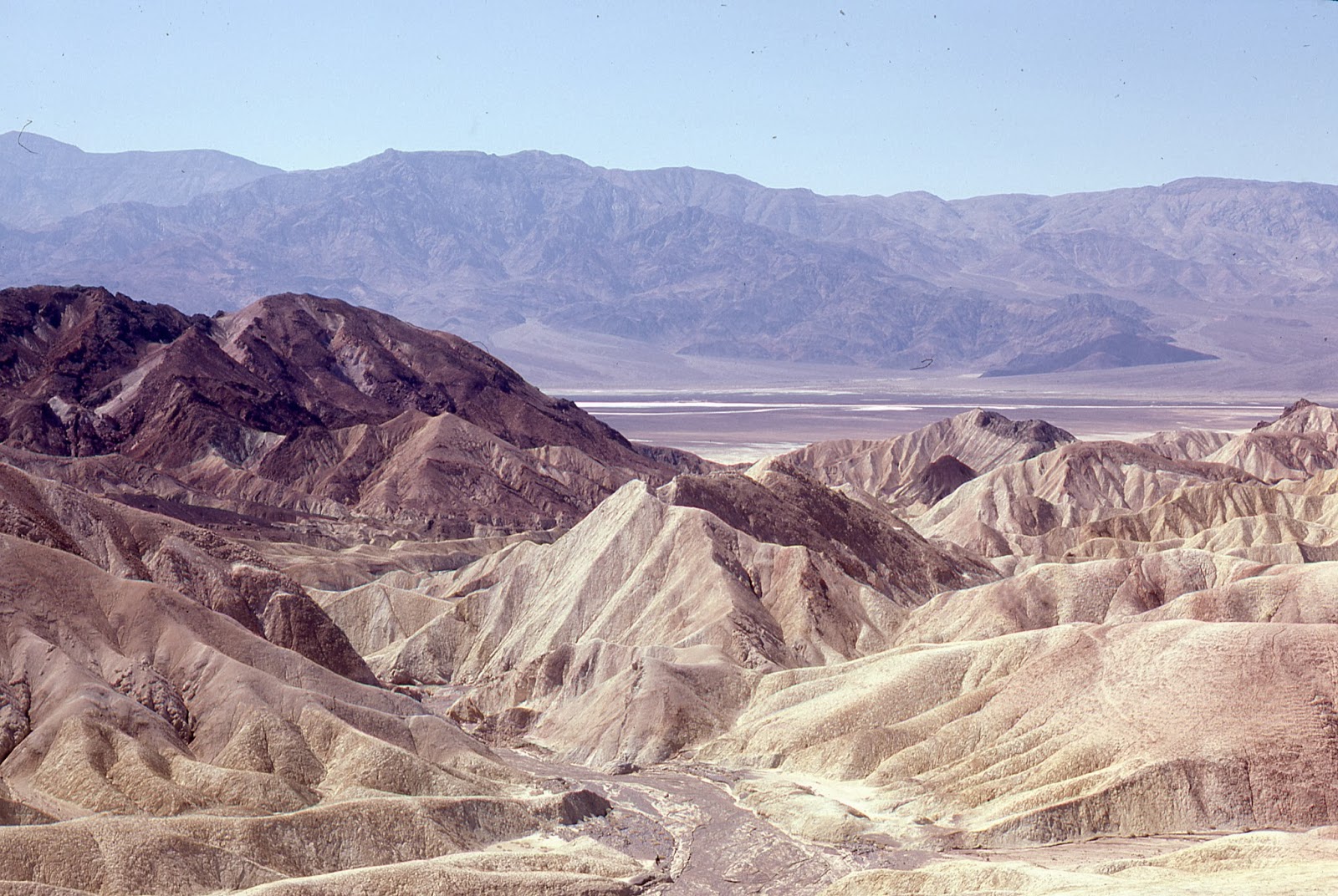
Even as late as the 1980’s Ash Meadows and the surrounding area was still pretty wild.  I spent the opening half of that decade working on my first graduate degree at the University of Nevada, Las Vegas and then working for the University as a Research Associate.  There were times when everyone else was busy and I would take a university vehicle, if one was available, or my own vehicle and, alone. I would drive northwest of Las Vegas toward what was then called the Desert Game Range or Ash Meadows or down to the floor of Death Valley or even further north toward Beatty and the Armargosa River and, on some days, east and then north to Hiko and Crystal Springs and the White River Country.  Pupfish, springfish, and poolfish, and their habitats…during those years I joined them wherever they were found.
Continued in the next post
 

Thursday, January 16, 2014

Hard Water


Hard water, rich in calcium and magnesium, is the kind of water you buy an expensive machine to chemically change so you can use the water in your home and not damage the pipes or the applicances.  But there is another kind of hard water and the hardness is not necessarily in its chemistry but rather in its physics. This kind of hard water comes in different forms from tiny stinging pellets that fall from the sky to clumps the size of baseballs that can injure and even destroy to sheets that coat other physical objects turning them into strange shapes.

In early January 2014 this kind of hard water covered much of the eastern and southeastern regions of the US, transforming extensive areas into slippery, dangerous places. The danger is the pragmatic aspect of this kind of hard water while the sculptures created by freezing are the aesthetic even artistic expression of the altered reality of water.  The forms that ice takes can be staggering in their strange and cold beauty.  The ice redefines reality turning it into something different but still reminiscent of other times, of warmer times.

Reality is not quite as fixed when things turn to ice. Water oozing from seeps and springs, that once dripped from rocky faces, becomes translucent steps of icy stalagmites. Waterfalls freeze in from the margins transformed into increasingly thin ribbons. And rivers, thousands of miles from the frozen Arctic and Antarctic host new islands of moving blocks…of ice. And reality is redefined.

Perhaps the most fascinating icy redefinition of reality occurs when the limbs and twigs of winter grey trees and shrubs become coated with sometimes shimmering and often translucent crystal coatings. Fascinating that is unless the coating becomes to thick and another kind of hard reality reveals itself.

Friday, November 15, 2013

Finding Water


There are a number of ways of finding water. Some walk over the land with a forked willow limb in a practice called ‘dowsing’. Others, perhaps more scientifically, study the geology carefully…still others look at the vegetation. Some, like Craig Childs (The Secret Knowledge of Water) spend days, even months, in the field under very dangerous conditions, in order to find water. My son Kevin and I recently used history and a little of the above (but not dowsing or danger) to find water.

We were talking one day when he mentioned having read somewhere of the building of the Virginia & Truckee Railroad (1865-1959) in the northwestern part of the colorful US State of Nevada. The book or books indicated that upon reaching a certain mileage, those building the railroad bed had encountered water.  Kevin located the possible location and passed the information on to me.  I used Google Earth to follow the still existing railroad bed, sans tracks and ties, and right where it should be was a stand of green vegetation. 

In late October of 2013, along with the Nevada gathering of our family, we walked about three kilometers along the old roadbed until we came to the stand of willow I had seen on the Google Map.  At first it was difficult to tell, but after looking more carefully we saw the water!  There, at the base of what is called a ‘cut’ in the slope of the hillside, we found a shallow pool, 3-4 meters long, of very clear water.  The soil around the pool was hard-packed sand and gravel and did not take the impression of animal tracks very well. We could not tell what animals visited the site but in these very arid lands, this water is valuable to many species.  Our visit took place on the driest day of the year and yet there was water in this shallow basin. It snowed in northwestern Nevada the day after our visit to the seep.

The old railroad way is well known and is used by hikers, runners, and a number of other visitors.  I’m sure there are many who know of this permanent seep, certainly hundreds of recreationists pass it each week. Regardless, it is always exciting to ‘find’ water. I’m sure we’ll return some day.     

Friday, November 1, 2013

When the Wells Run Dry


I facilitate a small group of wetland professionals called the Groundwater Wetlands Study Group.  The other day we got an email from a conservation professional who was affiliated with a project in Mongolia. He reported that some of the springs on the nature reserve he oversees had gone dry. It is not a new thing to hear about a well going dry or even springs going dry. Being raised in the desert country of the Western United States I’ve heard a number of stories about people having to dig new wells or drive their existing well deeper into Earth. It does appear, however, as if these reports are becoming more and more frequent. 


At the same time, in some places, new aquifers are being discovered. Such a new discovery recently happened in the nation of Kenya.  Invariably, a new discovery is rapidly accompanied by plans to exploit the water.  Rarely do these plans include sustainable use that incorporates natural recharge of the aquifer.  We continue to produce more and more of us. We continue to invent more and more ways to use resources, including water. And we consistently fail to and anticipate the results of our being and our actions.


In many locations the need for water is so desperate that little thought is given to what will happen when the wells run dry and, unless the use incorporates recharge, they will run dry…all of them, eventually.

 (Thanks to Google for the use of the well images)
 

Tuesday, October 15, 2013

Water In Home Places


We are very fortunate at Hidden Springs where our home is perched over a number of springs that fill a pool that may hold as much as 5,000 gallons.  Those springs and pool are at the lower end of the land we steward.  Even with natural springs we have brought water into closer proximity to our home.  Visitors to our front door are greeted with a small pool fed by a trickle of recirculated water that sounds like the tinkling of tiny crystal bells. The window in the studio of my artist wife Penny (http://artjourney-penny.blogspot.com) looks out over what we call the Studio Gardens complete with an ornamental pond, water lilies and other plants, frogs, and the frequent raccoon or two. One additional ‘water feature’ is located on the slope below the window in my study.  I can’t see it but I often see the other residents of Hidden Springs who come to water there.  During the late summer of 2013 an Eastern Whitetail doe had her fawn in the rhododendrons within a few feet of the house.  For the first few days, while her fawn was growing steady legs she took water from the small pool below the Study window.  It may be that the oldest recorded water gardens, or perhaps water features, were in what is called the Cradle of Civilization in Mesopotamia thousands of years ago. But the idea either spread rapidly or occurred almost simultaneously involving Egypt, Assyria, Babylonia, China, India, Japan, Rome, Persia and a number of other places among the evolving peoples of Earth.  What is it that we look for in these often quiet places and still waters?

Tuesday, October 1, 2013

Water in Wet Places


Living in the southern end of the Appalachian Mountains, one can become jaded about water. There is a lot of it here.  Often the streams and ditches run full.  Almost every low place is a puddle complete with frogs and dragonflies.  Only a few minutes from our home at Hidden Springs is an area that boasts literally hundreds of waterfalls.  And, according to climate change models, it is supposed to get wetter here in these mountains. 

It is easy to take all of that water for granted unless, like me, you were raised in a very dry place where you don’t take water for granted…not even a tiny trickle or a stagnant pool.  Even in a place literally overflowing with water some places are special.  For example, there is a small stream only a few miles from our home.  Not much more than a trickle, this stream wanders down a canyon beside a trail.  There is one place along the trial where I always stop to take a closer look at the stream.  At this spot the stream flows into a quiet, shallow pool. The pool is surrounded by lush grass and framed by a fallen long. I’m not sure what it is about this spot that grabs my attention.  I suspect it might be something about the peace that I feel here and, possibly, the harmony with which Nature has arranged the elements of the place.  I think most of us seek these special places in our lives, at least those of us who have some sense of the wild and the beauty in Nature.

Monday, April 15, 2013

Green Aesthetics II

Continued from the previous post.

Along with our human neighbors, on this often wind-swept ridge, we are frequently visited by deer, turkey, opossum and pesky raccoon (or two).  Bobcat, foxes, and coyote wander the streets and the bird population is colorful and varied.  The black bear moms bring their cubs to the spring-pool below the house and Bill, the six and half foot long black snake patrols the landscape and the hardscape for the frequent deer mice and the occasional copperhead. Red, a wood pecker, never fails to visit and greet me with a small screech when I sit in the alcove on the south-facing front of the house to read and soak in the sun.

I hope that my work over the past five decades of my 70 plus years, much of it mentioned in this blog, has contributed in some small way to help maintain the beauty of life on Earth and will continue to do so over whatever time I have left.  

Let me conclude these posts with the closing lines from the Navajo Night chant sometimes called House Made of Dawn.


In beauty it is finished


Although I will post occasionally to this blog, this is the last of my regularly scheduled bimonthly posts.

Monday, April 1, 2013

Green Aesthetics I


In my posts of August 8 and 15 (Color it Green I & II) I mentioned green aesthetics and suggested that the term might describe not only architectural design but also life styles.  Beauty is the heart of aesthetics and living in beauty is at the heart of a green aesthetic.

In my posts Life on the Wild Edge I & II (January 1 and 15, 2012) I discussed what, for us at Hidden Springs (our home), were some of our attempts to live aesthetically green lives.  I’d like to use this posting and to touch on these efforts again. When I say ‘our’ I’m referring to me and my artist wife Penny (http://artjourney-penny.blogspot.com).

There is a spiritual beauty in living intentionally as lightly on Earth as one can and a special sense of peace in creating a habitat that has a light, even minimal impact on the environment.

Although I never thought I’d find much nice to say about energy providers I have to admit that routinely getting a comparative report of our electrical consumption from our power company telling us that were among the least consumptive of those on its roles with a home of our modest size here in the mountains of western North Carolina, made us feel good…peaceful, somehow.  Over the years, we had put some effort into creating a healthy energy-efficient, safe environment.   Special tubes carefully pierce the roof and bring sunlight into places that previously required energy to light. We have replaced a large number of exotic plants with native plants.  Hundreds of gallons of rainwater are captured each year and used during drier times. Water not captured is directed to places around our small patch most in need of irrigation. The bricks of the house are cleaned with biodegradable cleaner, much of the lawn has been removed and replanted with native shrubs and perennials and mulched leaves are a crop used as ground cover.

Continued in the next post.

Friday, March 15, 2013

What Mercy ? (II)


Continued from the previous posting.

Africa is no stranger to the sounds of automatic weapons fire and it is also no stranger to poaching.   Elephants are high on the list of those species slaughtered for profit and this continual massacre is prompted by the desire of some religious adherents to possess religious icons carved from elephant ivory.  

In 2012, the Religion and Conservation Research Collaborative of the Society for Conservation Biology turned its attention to this issue following an article in National Geographic by Bryan Christy titled Blood Ivory.  Christy places the responsibility for the slaughter at the door of Catholicism and Buddhism, in some parts of the world. It is the hope of the Advisory Committee of the Collaborative and others that some influence can be brought to bear on religion at the institutional stage to speak out to their co-religionists to help stop the use of ivory for religious icons and thus reduce the number of elephant who fall victim to the poacher AK-47.

Thinking of the gunshot, deflated, desiccating carcasses of these magnificent and highly intelligent creatures while religious adherents  moan and chant over their extracted molars makes for dark meditation and yet another sobering  indictment of religion.

For additional information on the use of poached ivory as religious icons and the subsequent impacts on elephants go to http://www.conbio.org/policy/scb-statement-on-the-use-of-ivory-for-religious-objects


(Unless otherwise noted images courtesy of Google Images)

Friday, March 1, 2013

What Mercy ? (I)


In July of 2007 I was given permission by the Board of Governors of the Society for Conservation Biology (SCB) to form an exploratory committee to look into the relationships between conservation and religion.  A handful of society members rapidly grew to several hundred and we were granted Working Group status by the SCB (http://www.conbio.org/groups/working-groups/religion-and-conservation-biology). Over the years the Working Group has involved itself in a number of tasks. Most recently those tasks have focused on a religious practice called mercy release and on the use of elephant ivory for religious objects.  I have served on the Advisory Committee for both efforts.

Fang sheng is a practice by Buddhists and Daoists for releasing captive wildlife as an act of compassion. According to SCB’s Religion and conservation Research collaborative, this type of animal release causes “…adverse effects on biodiversity including the spread of invasive species, genetic swamping, extreme animal suffering, competition, vulnerability to predation, disease, and human health concerns.”  The problem isn’t even very complex.  Animals are trapped with the usual high mortality, they are kept captive with the usual high mortality, they are inappropriately released (with the usual high mortality) with expectable impacts on existing wild populations.  All of this takes place in the name of mercy and some form of spiritual redemption.   Again, it doesn’t take great intellect to figure out that there is nothing good going on here…and not much mercy.  As usual, the animal traffickers involved in Fang shen are the only ones making  good on the deal.

For additional information on Fang sheng and SCB efforts to reduce the practice see http://www.conbio.org/science-policy/policy/religion-and-conservation-biology-working-group-policy-position-on-the-rele.

(Image courtesy of Buddhist Channel through Google Images.)

Continued in the next posting.

Friday, February 15, 2013

Playing In The Mud II


 Continued from the previous post


Although it can be fun playing in the mud by yourself, it is often as enjoyable to have friends and colleagues with you.  It was for this reason that in fall of 2012 I posted a message on a couple of scientific lists that I was looking for someone(s) to play in the mud with.  The response was quick and gratifying and within a short time I had gathered dozens and dozens of scientists and practitioners.  We call ourselves the Groundwater Wetland Study Group and I’m in very good company! The focus of the Study Group is on seeps, springs, bogs, fens, and other groundwater-dependent wetland systems.                                Our members are working on projects from thermal wetlands in the American deserts to perched lakes in Tasmania to projects in the Mekong Delta of Vietnam. The Study Group is an  international organization with members in Nigeria, Romania, Brazil, Vietnam, and The United Kingdom, among a number of other places. Our members represent government on several levels, business, environmentalists, independents, and the academic world.  The Study Group currently hosts a Yahoo Group, and is guided by a Leadership Cadre. 


For additional information on the Groundwater Wetland Study Group contact Tom Baugh at 
springmountain1@att.net.