Sunday, February 15, 2015

Water, Hot and Cold III

(Continued from the preceding post)
 

(Mars courtesy of Google Images)


Perhaps it was the chalky white and the greens and golds of the cyanobacteria, their streamers and platelets that reminded me of work going on far, far away from our little desert project on the western edge of the Earth’s Great Basin. Could it be that it was in steamy pools such as this that life got its start on Earth and evolved into the rich, but now increasingly threatened diversity? In the depths of interplanetary space there are stirrings and activities that may point toward the possibility of life other than on Earth. 

On places called Titan, Enceladus, and Europa, spacecraft called Cassini and Galileo, infinitely small in the immensity of the cold solar abyss, supported by increasingly exact work with Earth and space-based telescopes probe for the possible presence of life-supporting habitats. Even further out, in December of 2014 NASA, announced that scientists using the Kepler telescope had discovered worlds circling distant stars that were very likely to host watery environments and a year earlier than that, in 2013 workers using the Hubble telescope discovered the possibility of water on distant worlds.  We now know that water is not as rare in the universe as we had once thought. But we don’t even have to look as far as the moons of the outer planets …closer to home robots Spirit and Opportunity wander the face of Earth’s sister Mars searching for signs of life in the now dry lake beds of Endeavour Crater and along the high ridges . On the saturnian moon Enceladus water is literally blown into space.

Given the immensity of the universe and the hundreds of millions of suns and their circling planets is it unlikely that life only happened and evolved on Earth? I think not. In our galaxy alone, the Milky Way, there are over 100 billion stars and ours is only one of 100 billion galaxies in the universe.  In our galaxy, how many planets lie in a zone where life is possible, the so-called Goldilocks Zone? The latest estimate, based primarily on the work with the Kepler telescope, holds that there are about 8.8 billion planets in The Milky Way where the temperatures are neither too hot nor too cold for life. With each passing day and each new discovery it becomes more and more likely that life-sustaining planets, with suitable conditions exist in the universe, let alone our galaxy. The odds for life on other worlds are very, very good, almost overwhelming.  It is even possible that the signature for life will be discovered in the ancient muds of the now dry lake beds of Mars. Although it is increasingly unlikely, with each passing year, that I will live to witness the discovery that we are not alone, there is even an outside chance that such a discovery will take place during what remains of my life. However, after ¾ of a century the machinery of life is becoming frayed around the edges. But I am sure that someone living today will see the discovery of life somewhere else in the universe. I am positive of that. Perhaps it will be my grandchildren who were the first volunteers to work with me at the small thermal wetland on the edge of the Great Basin.

 
(Enceledus courtesy of Google Images)
 

Sunday, February 1, 2015

Water, Hot and Cold II


(Continued from preceding post)


Water in arid lands is always understandably fascinating and attracts life in many forms. Coyote, the small wild

canid now found throughout much of the United States, frequently hunt  round this small thermal site, and deer bed down in the adjacent willows. An occasional opportunistic mountain lion might wander down from the high country passing by numerous other smaller species including, birds, rodents, and reptiles.  In deserts, there is always the possibility that springs and seeps will host unique species. Our work at these springs revealed nothing especially unique in terms of biota.
For as long as there have been humans here, we have visited these thermal springs.  

The Native American people, many of whom still live close by, sought healing in these waters.  In 1849, and later, miners seeking wealth in the California gold fields passed this site on their way over the Sierras and then again as they returned from California on their way to the hoped-for riches of nearby Goldfield, Silver City, and Virginia City.  Nearby, the Mormons built a structured in a community that was called Mormon Station and later Genoa. 

As we wander among the grass and rushes, stepping carefully between the steaming  outlets, it is hard not to wonder what others left moccasin prints and the impressions of hobnailed boots on this alkali encrusted slope above the small pool where the cooling waters collect. Something different has brought each one of us here…healing, a hot bath, food…and knowledge.


(Continued in the next post)

Thursday, January 15, 2015

Water, Hot and Cold I


I recently completed work on a small project in northwestern Nevada. As one of my colleagues, a young African scholar, likes to say…the project is in the land of cowboys and Indians. The study site is a thermal wetland composed of a number of seeps and springs that flow from the earth at the base of the foothills of the massive Sierra Nevada Mountain Range. These majestic mountains tower thousands of feet above the springs and the adjacent valley to the east. The waters of the springs are heated to a very hot 38C by the fault they sit atop. My task was to develop an ecological description of the site, including the flora and fauna, describe the human impacts to the site, and suggest some remediation and restoration activities.  I had a lot of help in this project from professionals and nonprofessionals who volunteered their time to conduct plant and bird surveys and assist in other ways.  These springs are only a remnant of a much larger system, part of which has been developed into a privately owned recreation facility with hot water…water to release the pain and tensions of life from those who submerge their often aging bodies into the steamy waters. The light odor of hydrogen sulfide permeates the mists that rise into the air of the cool desert mornings.  On the adjacent coldwater slough migratory waterfowl slide onto the surface of the spreading waters of the nearby river, with their origins high among the adjacent peaks.  Wetland is probably too grand a name for this small, shallow lagoon adjacent to the slough.  At one time, however, before the resort and the levee that separates the thermal springs from the slough were constructed, it is likely that this was a much more extensive landscape feature.

Baugh, T., D. Petite, L. J. Schmidt. River Fork Ranch Thermal wetland. Natural Areas Journal 34(3): 381-384.

Baugh, T., D. Petite, and J. Woods.  (In press). Natural Areas Journal River Fork Thermal Ranch- Biota.


(Continued in the next post)

Wednesday, May 28, 2014

When Time Runs Out

On May 20, 2014 I chaired a session on groundwater wetlands at the Joint Aquatic Sciences Meeting in Portland, Oregon in the western US. We had about 125 participants in our gathering. In the numerous other meeting rooms surrounding us over 3,000 professionals and their students had gathered to listen to and share their knowledge of freshwater systems and organisms. Not all that far away, several hundred miles to the southeast, the waters in the Colorado River, the life blood of the western United States, continued to decline. In 2014, Lake Powell, behind the Glen Canyon Dam would only rise to about half of its holding capacity. Further downstream, the water in Lake Mead behind Hoover Dam would be even lower.  Below the lake, men and women were tunneling to build the lowest possible drain to suck whatever water remains in the bottom of the lake just above the ooze and the mud.  The water of Lake Mead feed Las Vegas, the city maintained by the scions of organized crime…the city that should never have been. In the South Pole one of the great ice sheets was melting. We wouldn’t use that freshwater to replace what the skies and clouds no longer produced. Instead, it would contribute to rising sea level changing the very outline of the coasts of many areas on the planet.  Back in Portland, while the flow of knowledge and the peculiar culture of the people of science swirled around me, I wondered what could be done about the condition to which my generation and the generations before me had brought to this world. Was it possible that all of this incredible knowledge and intellect could be harnessed to address and solve some of these staggering challenges?  It is possible but not probable.  After all, the newspaper that morning  announced that over half of the citizens in the US denied that there was any problem at all and those deniers included the unfortunately or intentionally ignorant legislators in the State assemblies and the US Congress.  We seem to have moved beyond our ability to restore those systems and balances so critical to a healthy functioning planet and now we will have to pay the piper. (Ironically, while my colleagues and I were meeting, Portland announced a water emergency in the city. They hadn't run out of water but some form of fecal coliform bacteria had entered the water supply.)

Saturday, March 15, 2014

Alone III


Continued from the preceding post

There is something about being alone in the desert. As I said in an earlier posting, sometimes I had company when wandering the desert and sometimes not.  Traveling with a companion seems to fill those spaces in our spirit where we may not go very often.  But the doors to those spaces are open when you are alone. When you can see to the horizon where no structures and no indication of human occupancy or industry mar the view, you are alone. Where there is no other obvious animal life but a bird flitting across the dirt track you are driving on or a feral horse or burro standing on a low ridge in the distance, you are alone. I have often wondered if my observations were more acute and my science more precise when I was with others in the desert or alone.


One day a group of us were in Ash Meadows visiting with a ‘desert rat’ who had an old trailer there.  He was actually an engineer who treasured the solitude of the desert and who withdrew to his trailer and shade tree whenever possible.  This was the day that we heard that the US Congress had appropriated the funds necessary for the government to purchase Ash Meadows as an addition to the National Wildlife Refuge System.  I was surprised at how mixed my feelings were.  On the one hand, I was exceptionally pleased that the rich biodiversity would finally have lasting protection from the threat of exploitation or developers and agriculturists that had, for so long,  hung like the Sword of Damocles over this precious resource, this laboratory of evolution and biodiversity. On the other hand, I realized that the edgy days I had so enjoyed had come to an end.  Shortly after the purchase I left Nevada for another kind of desert…a desert of the spirit known as Washington, DC.


Saturday, March 1, 2014

Alone II


Continued from the preceding post

But most of my work focused on Ash Meadows including that strange rift in the crust of Earth called Devils Hole.  Back in the day, there were several ways to reach Ash Meadows. One route took you through what is now the Las Vegas bedroom community of Pahrump.  Another route was to drive north of Las Vegas for an hour or so, past Area 51 (with all of its reputedly strange goings-on), and turn left at the crossroads of Lathrop Wells almost across the street from the brothel with it’s deep red light. From Lathrop Wells the route takes you toward Death Valley Junction, with it’s unique opera house.  Just before you reached the Junction you would turn left again and head out across the desert at the cement factory.  Only in Nevada do you give directions by referencing Area 51 (As Agent Mulder might say, ‘The Truth is out there.’),  a brothel, and a cement factory. But this was the area in which we did some very exciting biology and conservation.

 
Strange things happened in that patch of desert in those times. Like the time that another student and I were driving into Ash Meadows from Pahrump only to be stopped by a Deputy Sheriff who refused to let us past because there was a body in the road. It was a man and he had been shot. We could see the body there in the dirt of the road with blood staining the gravel.  There were those in Las Vegas then (and I suspect even now who solved disagreements in a terminal manner).Shifting into four wheel drive, we circled the place of execution bumping through the sagebrush and across the stone-hard caliche.  As we came onto the main dirt and gravel road and drove on, I remember wondering how the man had died.  Was it quick or had he laid there bleeding his life out all alone in this this great, seemingly empty stretch of high desert …violent death in a land so filled with life. 


Continued in next post

Saturday, February 15, 2014

Alone I


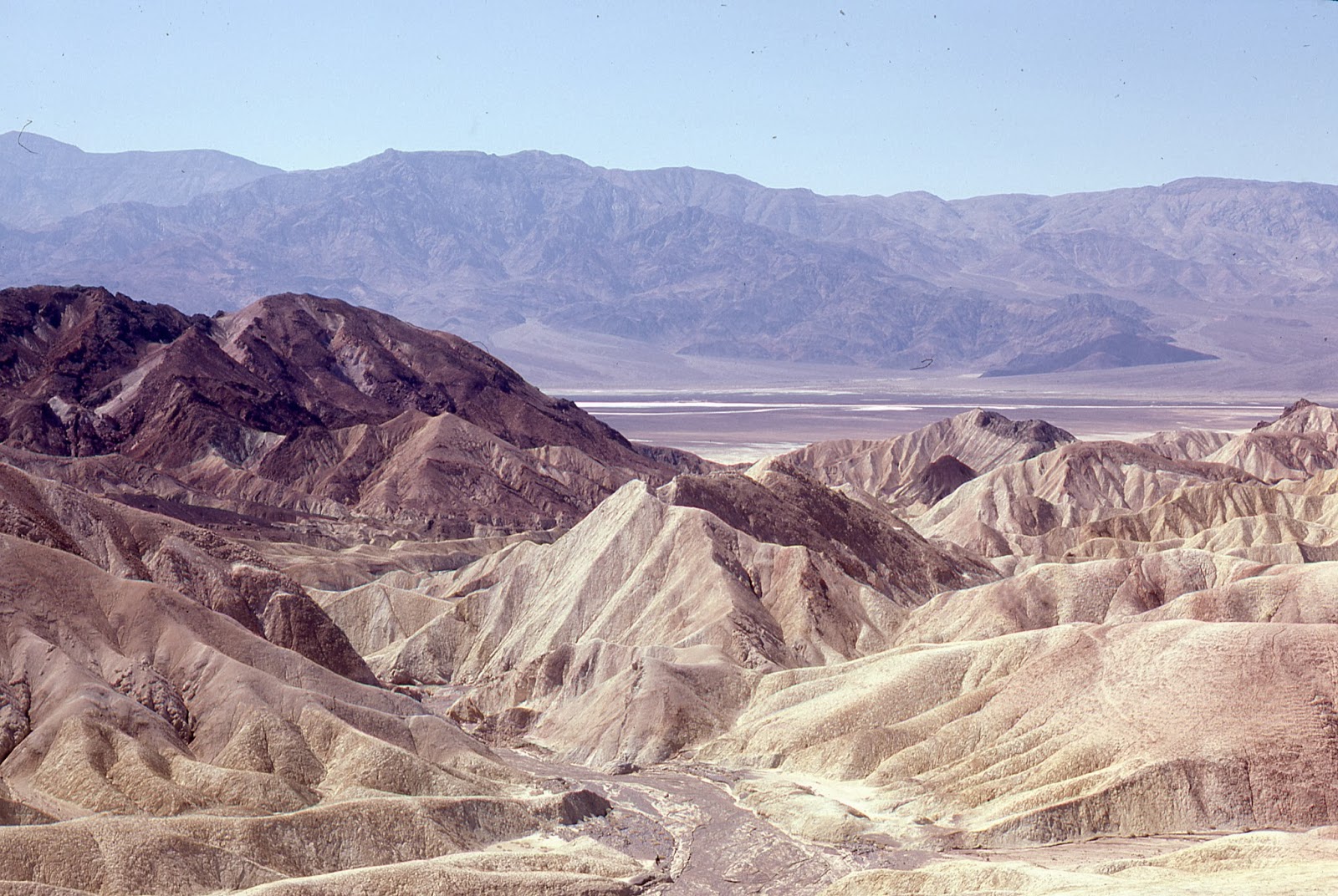
Not long ago, a younger colleague asked me to reminisce about the years I spent wandering around the deserts of southern Nevada and southeastern California.  Questions like this sometimes make me feel even older than I am.  When I think about it, however, I’m now into my seventh decade and much of what I took part in has become a page in the history of an exciting story in conservation biology.  In fact, for that region of the world, the period from the late 1970’s to the mid-1980’s were epochal for the dozens of species of plants, fish, and invertebrates living in the high desert area above Death Valley know as Ash Meadow. 

Even as late as the 1980’s Ash Meadows and the surrounding area was still pretty wild.  I spent the opening half of that decade working on my first graduate degree at the University of Nevada, Las Vegas and then working for the University as a Research Associate.  There were times when everyone else was busy and I would take a university vehicle, if one was available, or my own vehicle and, alone. I would drive northwest of Las Vegas toward what was then called the Desert Game Range or Ash Meadows or down to the floor of Death Valley or even further north toward Beatty and the Armargosa River and, on some days, east and then north to Hiko and Crystal Springs and the White River Country.  Pupfish, springfish, and poolfish, and their habitats…during those years I joined them wherever they were found.
Continued in the next post