(Continued from preceding post)
Like many mammals, coyotes like to play with things.
The coyotes at the preserve not only liked to play with things but they had a
playground in the field right in front of where their tunnel through the brush opened onto the
meadow. And their playground was strewn
with toys. From somewhere they had,
collected a very old plastic container that once held bar and chain oil. Another favorite was a green soda pop
bottle. They also liked the plastic cap
I placed over the shallow pvc well I had installed in one of the basins or
‘pans’ in the heart of the
preserve. I used the well to check the
water depth in the shallow basins or pans that wander through the Preserve and
the coyotes use the cap as a toy. If I
didn’t put it on securely I was likely to find it almost anywhere in the
preserve with the tiny indentations of sharp little coyote teeth all around its
perimeter. (I tried to remember to put
it on securely.)
Another item that
seemed to fascinate the coyotes was an amber plastic rain gauge. I didn’t mind the well cap, after all, just
as it was my responsibility to make sure the cap was securely fastened to the
well pipe, it was the coyote's responsibility to try to remove the cap. But the gauge was another matter. You don't have a bog if you don't have water
and you don't understand the bog if you don't understand how water works in, on, and through the bog. Consequently, I took weekly precipitation
amounts at the bog. After losing
several weeks of data to the coyote's inquisitiveness I placed the rain gauge
on a high pole.
 The coyote's favorite toy, however, was a plastic
yellow duck. I first discovered this duck
nestled among the reed canary grass. It wasn't until the staff began to remove
the reed canary grass that the coyotes discovered the plastic duck. This is not a small toy, nor is it light, so
it must have taken some effort to carry it back to the playground and that is
where I found it one day among the other toys...the green soda bottle, the
black bar and chain oil container, some Styrofoam and the yellow duck, with its
head missing.
The coyote's favorite toy, however, was a plastic
yellow duck. I first discovered this duck
nestled among the reed canary grass. It wasn't until the staff began to remove
the reed canary grass that the coyotes discovered the plastic duck. This is not a small toy, nor is it light, so
it must have taken some effort to carry it back to the playground and that is
where I found it one day among the other toys...the green soda bottle, the
black bar and chain oil container, some Styrofoam and the yellow duck, with its
head missing.
The coyotes at the preserve were often a highlight
of my weekly visits. Always good for a
chuckle and a smile, some times of tolerant frustration, I looked forward to
seeing them, catching a glimpse of them as they followed behind me, and hearing
them sing. For some reason the coyotes
left the preserve after I’d been there about a year and a half. It wasn’t long after that I completed my work
and moved on. The place just wasn’t the same without the coyotes.


.JPG) We are very fortunate at Hidden Springs where our home is
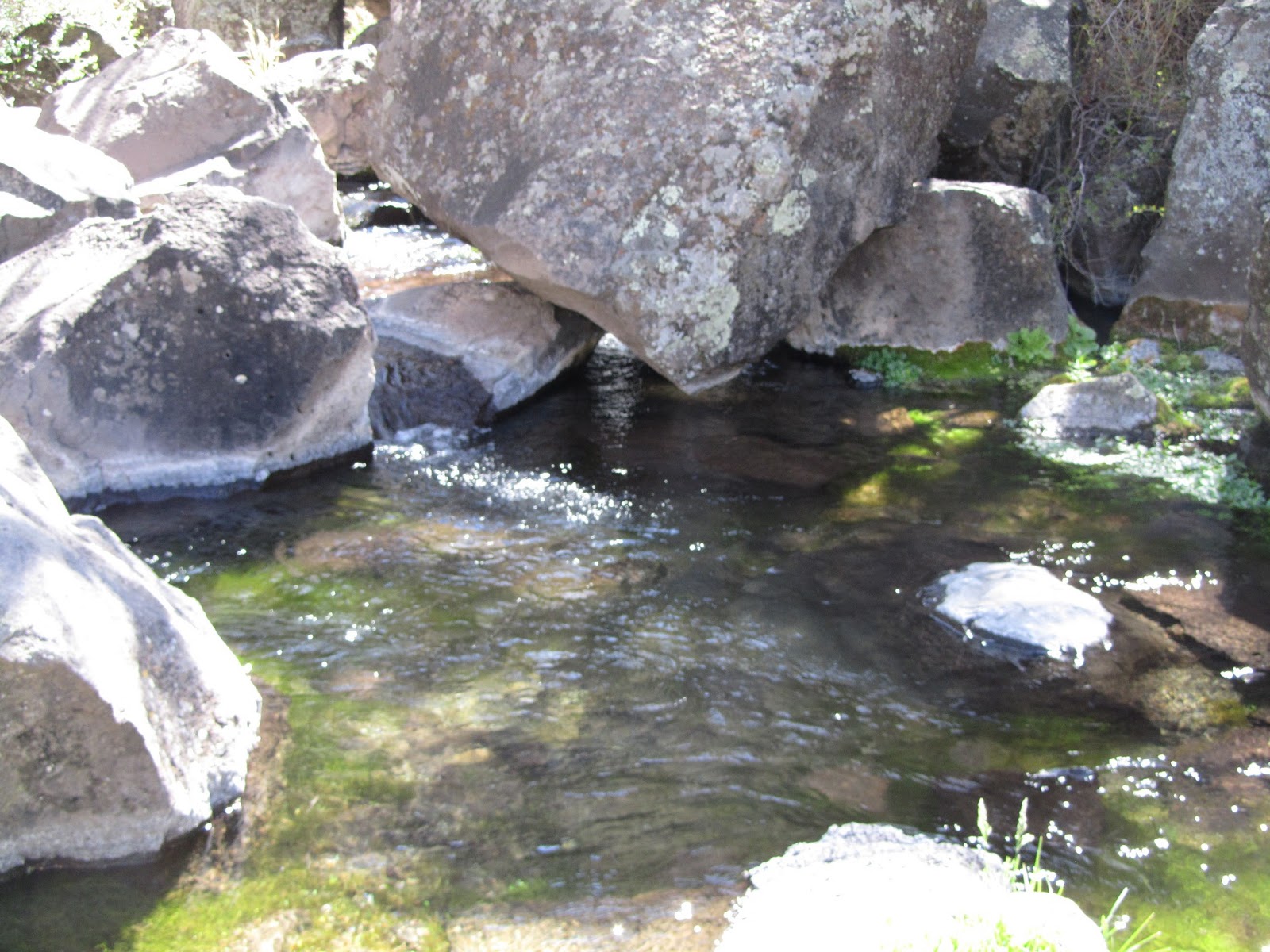
perched over a number of springs that fill a pool that may hold as much as
5,000 gallons. Those springs and pool
are at the lower end of the land we steward.
Even with natural springs we have brought water into closer proximity to
our home. Visitors to our front door are
greeted with a small pool fed by a trickle of recirculated water that sounds like
the tinkling of tiny crystal bells. The window in the studio of my artist wife
Penny (http://artjourney-penny.blogspot.com) looks out over what we call the Studio Gardens complete with an
ornamental pond, water lilies and other plants, frogs, and the frequent raccoon
or two. One additional ‘water feature’ is located on the slope below the window
in my study. I can’t see it but I often
see the other residents of Hidden Springs who come to water there. During the late summer of 2013 an Eastern
Whitetail doe had her fawn in the rhododendrons within a few feet of the
house. For the first few days, while her
fawn was growing steady legs she took water from the small pool below the Study
window. It may be that the oldest
recorded water gardens, or perhaps water features, were in what is called the
Cradle of Civilization in Mesopotamia thousands of years ago. But the idea
either spread rapidly or occurred almost simultaneously involving Egypt,
Assyria, Babylonia, China, India, Japan, Rome, Persia and a number of other
places among the evolving peoples of Earth.
What is it that we look for in these often quiet places and still waters?
We are very fortunate at Hidden Springs where our home is
perched over a number of springs that fill a pool that may hold as much as
5,000 gallons. Those springs and pool
are at the lower end of the land we steward.
Even with natural springs we have brought water into closer proximity to
our home. Visitors to our front door are
greeted with a small pool fed by a trickle of recirculated water that sounds like
the tinkling of tiny crystal bells. The window in the studio of my artist wife
Penny (http://artjourney-penny.blogspot.com) looks out over what we call the Studio Gardens complete with an
ornamental pond, water lilies and other plants, frogs, and the frequent raccoon
or two. One additional ‘water feature’ is located on the slope below the window
in my study. I can’t see it but I often
see the other residents of Hidden Springs who come to water there. During the late summer of 2013 an Eastern
Whitetail doe had her fawn in the rhododendrons within a few feet of the
house. For the first few days, while her
fawn was growing steady legs she took water from the small pool below the Study
window. It may be that the oldest
recorded water gardens, or perhaps water features, were in what is called the
Cradle of Civilization in Mesopotamia thousands of years ago. But the idea
either spread rapidly or occurred almost simultaneously involving Egypt,
Assyria, Babylonia, China, India, Japan, Rome, Persia and a number of other
places among the evolving peoples of Earth.
What is it that we look for in these often quiet places and still waters?



.JPG)


