Saturday, March 1, 2014

Alone II


Continued from the preceding post

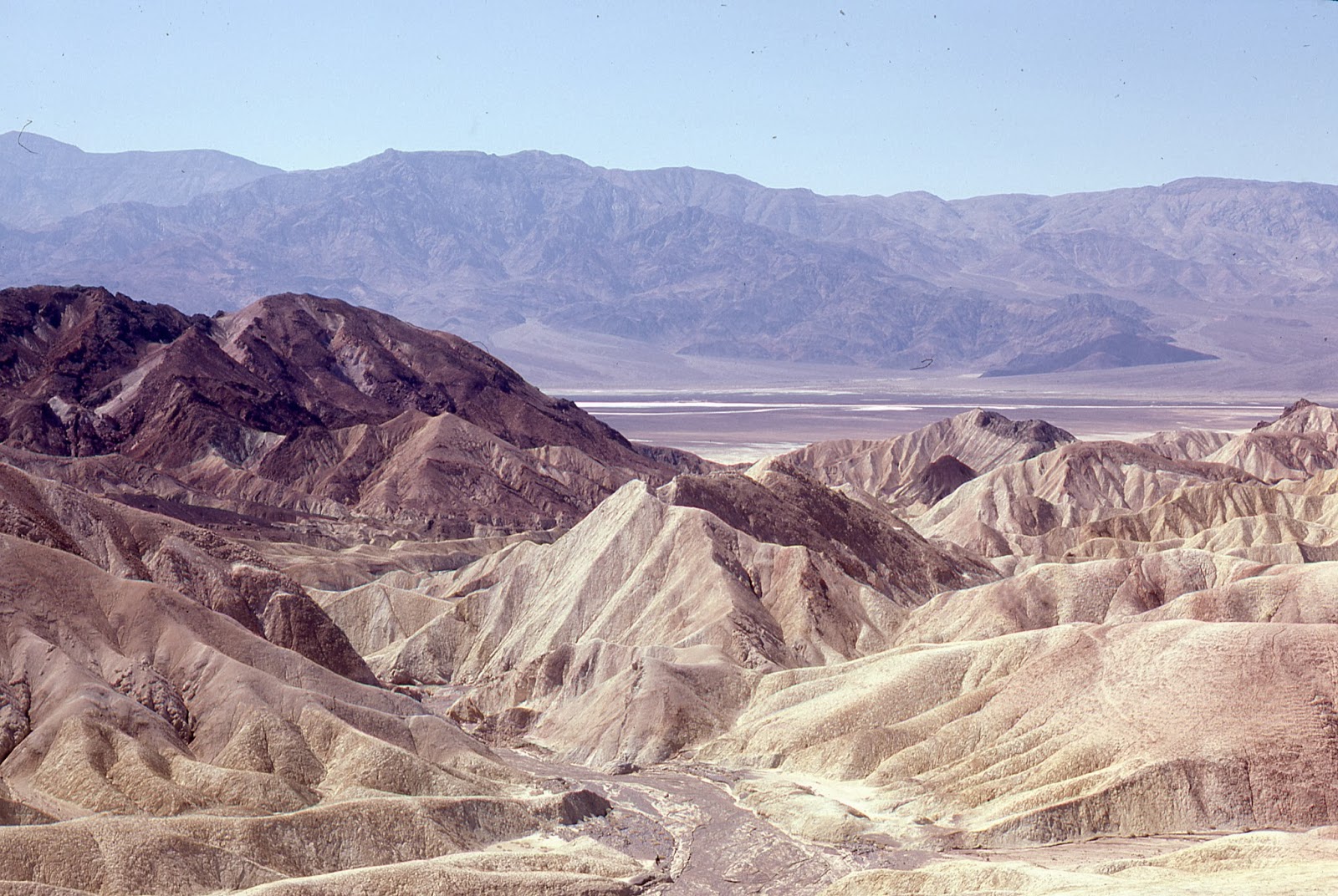
But most of my work focused on Ash Meadows including that strange rift in the crust of Earth called Devils Hole.  Back in the day, there were several ways to reach Ash Meadows. One route took you through what is now the Las Vegas bedroom community of Pahrump.  Another route was to drive north of Las Vegas for an hour or so, past Area 51 (with all of its reputedly strange goings-on), and turn left at the crossroads of Lathrop Wells almost across the street from the brothel with it’s deep red light. From Lathrop Wells the route takes you toward Death Valley Junction, with it’s unique opera house.  Just before you reached the Junction you would turn left again and head out across the desert at the cement factory.  Only in Nevada do you give directions by referencing Area 51 (As Agent Mulder might say, ‘The Truth is out there.’),  a brothel, and a cement factory. But this was the area in which we did some very exciting biology and conservation.

 
Strange things happened in that patch of desert in those times. Like the time that another student and I were driving into Ash Meadows from Pahrump only to be stopped by a Deputy Sheriff who refused to let us past because there was a body in the road. It was a man and he had been shot. We could see the body there in the dirt of the road with blood staining the gravel.  There were those in Las Vegas then (and I suspect even now who solved disagreements in a terminal manner).Shifting into four wheel drive, we circled the place of execution bumping through the sagebrush and across the stone-hard caliche.  As we came onto the main dirt and gravel road and drove on, I remember wondering how the man had died.  Was it quick or had he laid there bleeding his life out all alone in this this great, seemingly empty stretch of high desert …violent death in a land so filled with life. 


Continued in next post

Saturday, February 15, 2014

Alone I


Not long ago, a younger colleague asked me to reminisce about the years I spent wandering around the deserts of southern Nevada and southeastern California.  Questions like this sometimes make me feel even older than I am.  When I think about it, however, I’m now into my seventh decade and much of what I took part in has become a page in the history of an exciting story in conservation biology.  In fact, for that region of the world, the period from the late 1970’s to the mid-1980’s were epochal for the dozens of species of plants, fish, and invertebrates living in the high desert area above Death Valley know as Ash Meadow. 

Even as late as the 1980’s Ash Meadows and the surrounding area was still pretty wild.  I spent the opening half of that decade working on my first graduate degree at the University of Nevada, Las Vegas and then working for the University as a Research Associate.  There were times when everyone else was busy and I would take a university vehicle, if one was available, or my own vehicle and, alone. I would drive northwest of Las Vegas toward what was then called the Desert Game Range or Ash Meadows or down to the floor of Death Valley or even further north toward Beatty and the Armargosa River and, on some days, east and then north to Hiko and Crystal Springs and the White River Country.  Pupfish, springfish, and poolfish, and their habitats…during those years I joined them wherever they were found.
Continued in the next post
 

Thursday, January 16, 2014

Hard Water


Hard water, rich in calcium and magnesium, is the kind of water you buy an expensive machine to chemically change so you can use the water in your home and not damage the pipes or the applicances.  But there is another kind of hard water and the hardness is not necessarily in its chemistry but rather in its physics. This kind of hard water comes in different forms from tiny stinging pellets that fall from the sky to clumps the size of baseballs that can injure and even destroy to sheets that coat other physical objects turning them into strange shapes.

In early January 2014 this kind of hard water covered much of the eastern and southeastern regions of the US, transforming extensive areas into slippery, dangerous places. The danger is the pragmatic aspect of this kind of hard water while the sculptures created by freezing are the aesthetic even artistic expression of the altered reality of water.  The forms that ice takes can be staggering in their strange and cold beauty.  The ice redefines reality turning it into something different but still reminiscent of other times, of warmer times.

Reality is not quite as fixed when things turn to ice. Water oozing from seeps and springs, that once dripped from rocky faces, becomes translucent steps of icy stalagmites. Waterfalls freeze in from the margins transformed into increasingly thin ribbons. And rivers, thousands of miles from the frozen Arctic and Antarctic host new islands of moving blocks…of ice. And reality is redefined.

Perhaps the most fascinating icy redefinition of reality occurs when the limbs and twigs of winter grey trees and shrubs become coated with sometimes shimmering and often translucent crystal coatings. Fascinating that is unless the coating becomes to thick and another kind of hard reality reveals itself.

Friday, November 15, 2013

Finding Water


There are a number of ways of finding water. Some walk over the land with a forked willow limb in a practice called ‘dowsing’. Others, perhaps more scientifically, study the geology carefully…still others look at the vegetation. Some, like Craig Childs (The Secret Knowledge of Water) spend days, even months, in the field under very dangerous conditions, in order to find water. My son Kevin and I recently used history and a little of the above (but not dowsing or danger) to find water.

We were talking one day when he mentioned having read somewhere of the building of the Virginia & Truckee Railroad (1865-1959) in the northwestern part of the colorful US State of Nevada. The book or books indicated that upon reaching a certain mileage, those building the railroad bed had encountered water.  Kevin located the possible location and passed the information on to me.  I used Google Earth to follow the still existing railroad bed, sans tracks and ties, and right where it should be was a stand of green vegetation. 

In late October of 2013, along with the Nevada gathering of our family, we walked about three kilometers along the old roadbed until we came to the stand of willow I had seen on the Google Map.  At first it was difficult to tell, but after looking more carefully we saw the water!  There, at the base of what is called a ‘cut’ in the slope of the hillside, we found a shallow pool, 3-4 meters long, of very clear water.  The soil around the pool was hard-packed sand and gravel and did not take the impression of animal tracks very well. We could not tell what animals visited the site but in these very arid lands, this water is valuable to many species.  Our visit took place on the driest day of the year and yet there was water in this shallow basin. It snowed in northwestern Nevada the day after our visit to the seep.

The old railroad way is well known and is used by hikers, runners, and a number of other visitors.  I’m sure there are many who know of this permanent seep, certainly hundreds of recreationists pass it each week. Regardless, it is always exciting to ‘find’ water. I’m sure we’ll return some day.     

Friday, November 1, 2013

When the Wells Run Dry


I facilitate a small group of wetland professionals called the Groundwater Wetlands Study Group.  The other day we got an email from a conservation professional who was affiliated with a project in Mongolia. He reported that some of the springs on the nature reserve he oversees had gone dry. It is not a new thing to hear about a well going dry or even springs going dry. Being raised in the desert country of the Western United States I’ve heard a number of stories about people having to dig new wells or drive their existing well deeper into Earth. It does appear, however, as if these reports are becoming more and more frequent. 


At the same time, in some places, new aquifers are being discovered. Such a new discovery recently happened in the nation of Kenya.  Invariably, a new discovery is rapidly accompanied by plans to exploit the water.  Rarely do these plans include sustainable use that incorporates natural recharge of the aquifer.  We continue to produce more and more of us. We continue to invent more and more ways to use resources, including water. And we consistently fail to and anticipate the results of our being and our actions.


In many locations the need for water is so desperate that little thought is given to what will happen when the wells run dry and, unless the use incorporates recharge, they will run dry…all of them, eventually.

 (Thanks to Google for the use of the well images)
 

Tuesday, October 15, 2013

Water In Home Places


We are very fortunate at Hidden Springs where our home is perched over a number of springs that fill a pool that may hold as much as 5,000 gallons.  Those springs and pool are at the lower end of the land we steward.  Even with natural springs we have brought water into closer proximity to our home.  Visitors to our front door are greeted with a small pool fed by a trickle of recirculated water that sounds like the tinkling of tiny crystal bells. The window in the studio of my artist wife Penny (http://artjourney-penny.blogspot.com) looks out over what we call the Studio Gardens complete with an ornamental pond, water lilies and other plants, frogs, and the frequent raccoon or two. One additional ‘water feature’ is located on the slope below the window in my study.  I can’t see it but I often see the other residents of Hidden Springs who come to water there.  During the late summer of 2013 an Eastern Whitetail doe had her fawn in the rhododendrons within a few feet of the house.  For the first few days, while her fawn was growing steady legs she took water from the small pool below the Study window.  It may be that the oldest recorded water gardens, or perhaps water features, were in what is called the Cradle of Civilization in Mesopotamia thousands of years ago. But the idea either spread rapidly or occurred almost simultaneously involving Egypt, Assyria, Babylonia, China, India, Japan, Rome, Persia and a number of other places among the evolving peoples of Earth.  What is it that we look for in these often quiet places and still waters?

Tuesday, October 1, 2013

Water in Wet Places


Living in the southern end of the Appalachian Mountains, one can become jaded about water. There is a lot of it here.  Often the streams and ditches run full.  Almost every low place is a puddle complete with frogs and dragonflies.  Only a few minutes from our home at Hidden Springs is an area that boasts literally hundreds of waterfalls.  And, according to climate change models, it is supposed to get wetter here in these mountains. 

It is easy to take all of that water for granted unless, like me, you were raised in a very dry place where you don’t take water for granted…not even a tiny trickle or a stagnant pool.  Even in a place literally overflowing with water some places are special.  For example, there is a small stream only a few miles from our home.  Not much more than a trickle, this stream wanders down a canyon beside a trail.  There is one place along the trial where I always stop to take a closer look at the stream.  At this spot the stream flows into a quiet, shallow pool. The pool is surrounded by lush grass and framed by a fallen long. I’m not sure what it is about this spot that grabs my attention.  I suspect it might be something about the peace that I feel here and, possibly, the harmony with which Nature has arranged the elements of the place.  I think most of us seek these special places in our lives, at least those of us who have some sense of the wild and the beauty in Nature.